There are sporting events, and then there is the World Cup.
60 Years of World Cup, the FIFA World Cup has been more than a tournament. It has been a mirror of culture, politics, identity, and emotion. From grainy black-and-white broadcasts in living rooms to ultra-HD streams on smartphones, the game has traveled across generations — and somehow, it still feels the same.
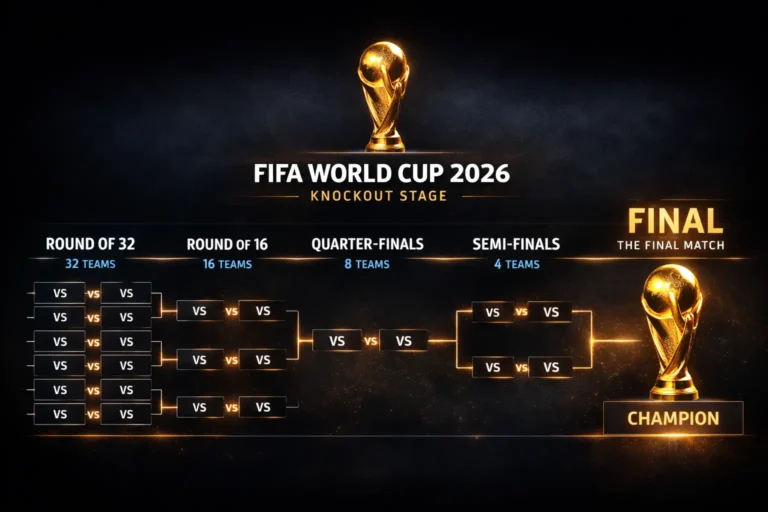
This is a journey from the roar of Wembley Stadium in 1966 to the massive, multi-nation spectacle awaiting us in 2026. It’s a story told through goals, tears, controversies, and unforgettable heroes. Click here for World cup knockout Stages.
1966 – When Football “Came Home”
The summer of 1966 FIFA World Cup lives permanently in English folklore.
The final at Wembley was tight, tense, and dramatic. Then came extra time. Then came a moment that still sparks debate: did the ball cross the line?
Geoff Hurst didn’t wait for history to decide. He scored again. And again. The only hat-trick ever scored in a World Cup final sealed England’s 4–2 victory over West Germany.
For many fans, that night wasn’t just about lifting a trophy. It was about identity. Pride. Belief. Football became part of the national DNA.
The 1970s – Brazil’s Beautiful Game
If 1966 was about drama, 1970 was about artistry.
The 1970 FIFA World Cup gave the world a Brazilian side that many still call the greatest team ever assembled. They moved like dancers. Passed like poets. Attacked like a wave.
At the center stood Pelé — already a global icon, but now immortalized. His vision, composure, and joy defined the tournament.
For fans watching around the world, football stopped being just a competitive sport. It became entertainment. It became art.

1986 – One Man, Two Goals, Infinite Debate
Every World Cup has a defining image. In the 1986 FIFA World Cup, it was a small Argentine genius rising above England’s defense.
Diego Maradona scored twice in that quarterfinal. 60 Years of World Cup One goal was controversial — the infamous “Hand of God.” The other was breathtaking — weaving past five defenders in what many call the “Goal of the Century.”
In just four minutes, Maradona showed football’s dual nature: flawed and magical. Human and divine.
Fans still argue about which goal defines him more.
1998 – France’s Fairytale
By the late 1990s, football had gone global. Sponsorships grew. Television rights exploded. The World Cup became a commercial powerhouse.
At the 1998 FIFA World Cup, the host nation found its hero in Zinedine Zidane.
Two towering headers in the final against Brazil gave France its first World Cup. The image of Zidane, calm and composed under pressure, symbolized a multicultural French team that united the country.
For many supporters, it was proof that football could bridge divides.

2002 – A Global Game Reborn
The 2002 FIFA World Cup was historic — 60 Years of World Cup the first hosted in Asia, and the first co-hosted by two nations.
It also delivered redemption.
Ronaldo Nazário arrived after years of injury heartbreak. With his unmistakable haircut and lethal finishing, he scored eight goals — including two in the final against Germany.
It wasn’t just a title win. It was a comeback story. And fans love nothing more than a comeback.
2010 – Africa’s Moment
When the 2010 FIFA World Cup kicked off, the sound of vuvuzelas echoed across the globe.
For the first time, the tournament was hosted on African soil. It felt symbolic — overdue, even.
Spain lifted the trophy, playing a patient, possession-heavy style that redefined modern tactics. Their victory marked a shift: technical control was now king.
But beyond tactics, 2010 was about representation. About inclusion. About football truly belonging to everyone.
2014 to 2022 – The Era of Messi and Legacy
The 21st century gave us a rivalry that shaped a generation: Messi vs Ronaldo.
At the 2014 FIFA World Cup, Germany stunned the world with a 7–1 demolition of Brazil. It was brutal, unforgettable, historic.
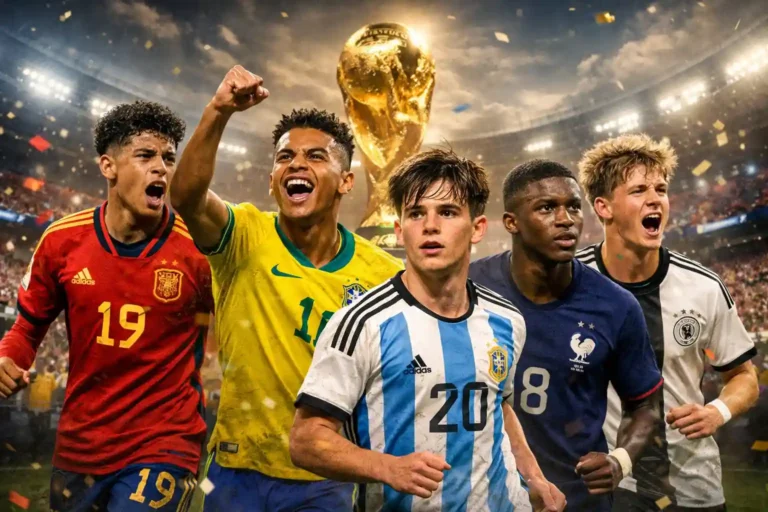
In Russia at the 2018 FIFA World Cup, France’s young stars signaled a new era.
Then came the 2022 FIFA World Cup.
And finally, redemption.
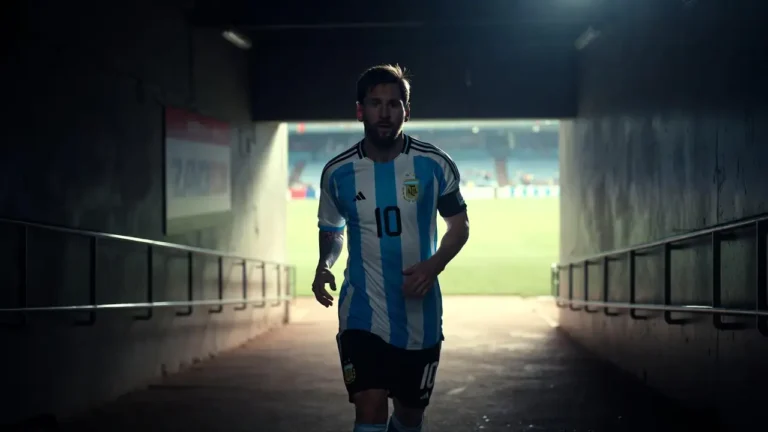
Lionel Messi lifted the trophy after one of the most dramatic finals ever played. For fans who had followed his journey for nearly two decades, it felt like destiny fulfilled.
The debate ended. The legacy was sealed.
How the Game Changed
Over sixty years, football has evolved dramatically:
- Formations shifted from rigid 4-4-2 systems to fluid pressing structures.
- Sports science transformed player fitness and longevity.
- VAR introduced technology — and controversy — into key decisions.
- Data analytics now influence tactics in ways unimaginable in 1966.
Yet despite all these changes, one thing remains constant: the raw emotion when the ball hits the net.
Fan Culture – From Radios to Reels
In 1966, families gathered around a single television.
In 2022, billions streamed matches live on mobile devices.
Chants that once echoed only inside stadiums now trend globally within seconds. Social media has turned every fan into a commentator, every moment into a meme.
And still, when your nation scores, the reaction is the same — strangers hugging, fireworks exploding, tears streaming.
Football doesn’t age. It just adapts.
Looking Ahead: 2026 and a New Chapter
The 2026 FIFA World Cup promises something unprecedented.
For the first time, 48 teams will compete. The tournament will span the United States, Canada, and Mexico — a true continental spectacle.
More nations. ,Many stories. More dreams.
Sixty years after Wembley ’66, the World Cup is no longer just a tournament. It is a shared global memory that resets every four years.
Conclusion: One Trophy, Billions of Hearts
From Geoff Hurst’s hat-trick to Lionel Messi’s crowning moment, the World Cup has given us scenes that define generations.
It has survived controversy, politics, expansion, commercialization, and change.
Because at its core, football remains simple.
Twenty-two players. One ball. Ninety minutes.
And the possibility of history.
As we approach 2026, one thing is certain: somewhere in the world, a child is watching — and dreaming of becoming the next name added to this timeless story.
About the Author