Argentina and Spain will meet in the 2026 FIFA World Cup final on Sunday, July 19, at New York New Jersey Stadium in East Rutherford. Kickoff is scheduled for 3:00 p.m. ET, which is midnight in Pakistan at the start of Monday, July 20.
This final brings together the tournament’s strongest attack and most disciplined defence. Argentina have scored 19 goals and won all seven matches, while Spain have conceded only once during an unbeaten campaign. The outcome may depend less on possession and more on which team controls the spaces created after possession changes.

How Argentina and Spain Reached the Final
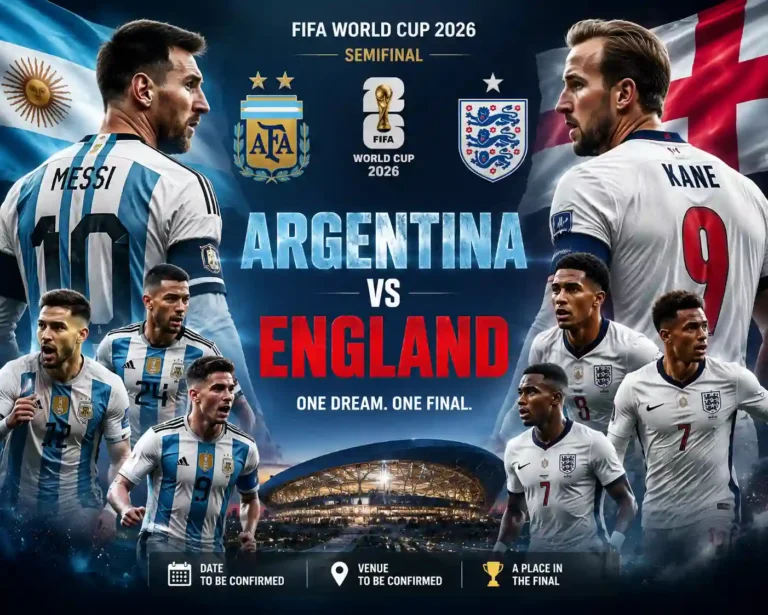
Argentina reached their second consecutive World Cup final after a dramatic 2–1 semifinal victory over England. Lionel Scaloni’s team trailed until the closing stages, but Enzo Fernández equalised before substitute Lautaro Martínez scored the stoppage-time winner. Lionel Messi created both goals, underlining Argentina’s ability to survive difficult periods and finish strongly.
Spain produced a more controlled semifinal performance, defeating France 2–0 through goals from Mikel Oyarzabal and Pedro Porro. Their midfield restricted France’s supply into dangerous areas, while their pressing and positional discipline prevented Kylian Mbappé and France’s other attackers from establishing a consistent rhythm.
Argentina Tactical Analysis
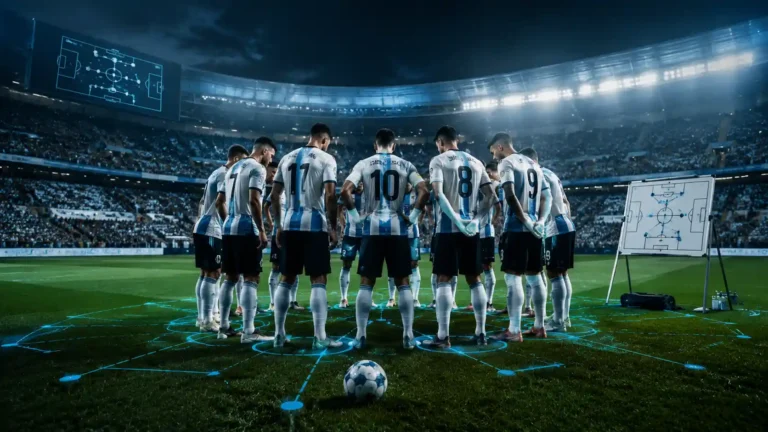
Argentina are likely to defend in a compact shape before attacking through Messi’s movement between midfield and defence. Messi no longer needs to dominate every phase. His value comes from identifying the decisive moment, drawing opponents toward him and releasing runners such as Lautaro Martínez, Julián Álvarez or advancing midfielders.
Scaloni’s main challenge is protecting the central area without becoming too passive. England caused Argentina problems when attacking quickly, and Spain possess greater technical security in midfield. Argentina must press selectively rather than chase the ball, keeping enough players behind possession to prevent Spain from creating numerical advantages around Rodri.
Spain Tactical Analysis
Spain’s system is built around control. Rodri provides the passing base, Fabián Ruiz progresses the ball, and Dani Olmo operates between the lines. Lamine Yamal and Spain’s other wide attackers stretch the opposition, opening central spaces for midfield runners and creating one-against-one situations near the penalty area.
Their possession is also a defensive tool. By keeping the ball and counterpressing immediately after losing it, Spain limit opponents’ opportunities to build attacks. They have allowed an average of only one shot on target per match, demonstrating how effectively their midfield structure protects the defence.
Key Battles That Could Decide the Final
The central contest between Messi and Rodri could define the match. Rodri must prevent Messi from receiving freely in the inside-right channel, but following him too closely could create space behind Spain’s midfield. Spain may instead use coordinated pressure, with one player confronting Messi while nearby defenders block his passing options.
Argentina must also manage Lamine Yamal without weakening their defensive shape. Double-marking him could leave space for Dani Olmo or Pedro Porro, while defending him one-on-one carries obvious risk. Yamal’s ability to move inside, win fouls and create overloads was central to Spain’s semifinal victory over France.
Strengths and Weaknesses
Argentina’s greatest strengths are their attacking variety, tournament experience and emotional resilience. They can create through Messi, attack crosses through Lautaro and generate goals from midfield. Their weakness is that they sometimes surrender control before responding, a dangerous habit against a Spain side comfortable protecting possession.
Spain are tactically balanced, technically secure and extremely difficult to break down. However, their controlled approach can sometimes reduce their attacking urgency. If Argentina defend deep and deny central space, Spain may be forced into predictable wide circulation rather than clear scoring opportunities.
| Area | Argentina | Spain |
|---|---|---|
| Primary strength | Direct attacking quality | Possession and control |
| Main creator | Lionel Messi | Lamine Yamal and Dani Olmo |
| Midfield focus | Transitions and vertical passing | Positional dominance |
| Defensive concern | Space after losing possession | Counterattacks behind the press |
| Psychological edge | Final experience | Long unbeaten run |
Team Selection and Possible Changes
Argentina used a 4-3-3 structure against England, but Lautaro Martínez’s winning contribution gives Scaloni an important selection decision. Starting Lautaro would add penalty-area presence, while using him from the bench would preserve a powerful late attacking option. Cristian Romero, Alexis Mac Allister, Enzo Fernández and Messi should remain central to the plan.
Spain could retain the team that defeated France, with Unai Simón behind a defence containing Pedro Porro, Pau Cubarsí, Aymeric Laporte and Marc Cucurella. Rodri and Fabián Ruiz should control midfield, while Yamal, Olmo and Oyarzabal provide the attacking structure. Nico Williams and Mikel Merino offer significant alternatives from the bench.
Argentina vs Spain Prediction
Spain enter with the stronger defensive record and a clearer method of controlling matches. Their ability to circulate possession could force Argentina to defend for extended periods. However, Argentina have scored more goals than any other team and possess several players capable of deciding the match from a single transition or set piece.
The most likely scenario is a tight match with limited clear chances. Spain may control more possession, but Argentina’s experience and attacking depth should keep them competitive until the closing stages.
Prediction: Argentina 1–1 Spain after 90 minutes. Argentina to win after extra time or penalties.
Final Verdict
Spain appear slightly stronger structurally because their midfield protects the defence while controlling possession. Argentina, however, are more comfortable in unpredictable matches. They have already demonstrated that they can remain composed when trailing and produce decisive actions under extreme pressure.
The final could therefore be decided by game management rather than overall dominance. Spain must turn possession into goals before Argentina’s substitutes influence the contest. Argentina must remain compact, survive Spain’s pressure and give Messi enough freedom to create one final defining World Cup moment.
About the Author