Alright, let’s go full deep dive on the FIFA World Cup 2026 official match ball — the adidas TRIONDA. Since the tournament is just a few months away (kicking off June 11, 2026), this is the ball that’s stealing the show right now.
I’ve structured it as a complete, detailed guide — like a mini article you can scroll through easily.
Introduction & Official Name
The official match ball for the FIFA World Cup 26™ (hosted by Canada, Mexico, and the United States) is called TRIONDA, produced by adidas.
- Name meaning: “Tri” (three) + “Onda” (Spanish for “wave”) = “three waves”.
- It celebrates the historic first-ever three-nation co-hosting — Canada, Mexico, and USA uniting as one.
Unveiled on October 2-3, 2025, it’s already in use for testing, warm-ups, and will be the ball for all 104 matches starting in summer 2026.
Design & Visuals
TRIONDA stands out with a bold, vibrant look that’s all about unity and energy:
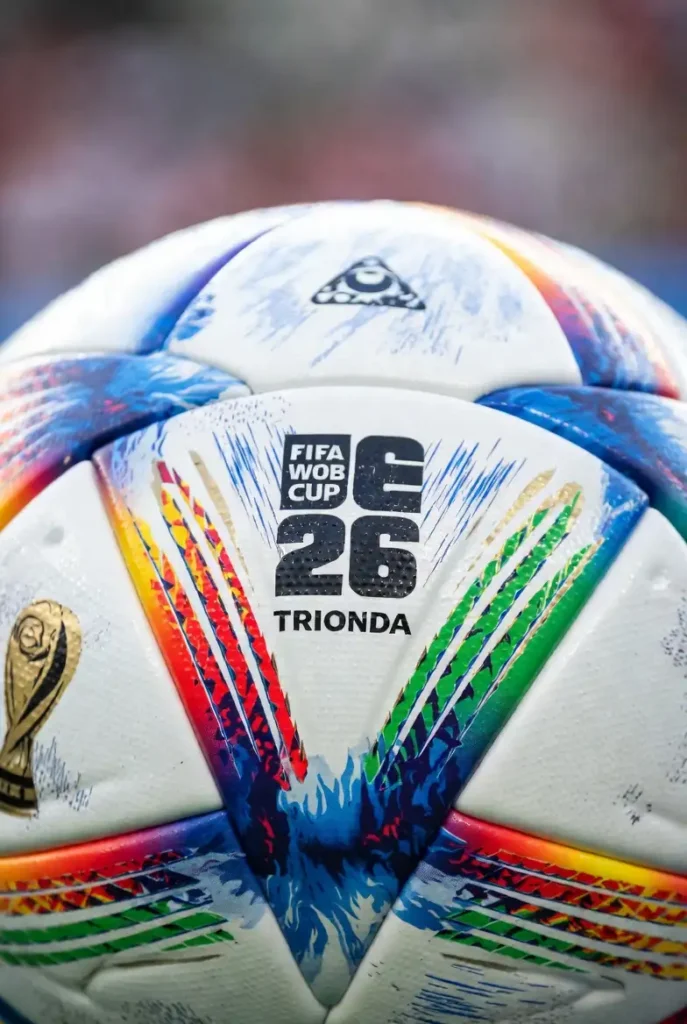
- Color scheme: Red, green, and blue — directly inspired by the national flags/colors of the three hosts (Canada’s red, Mexico’s green, USA’s blue).
- Base: Mostly white with flowing, wave-like accents in those tri-colors.
- Wave inspiration: Fluid, swirling graphics mimic the famous stadium “la ola” (Mexican wave) — the panels create dynamic, wave-shaped movements across the surface.
- Symbolic elements:
- Panels connect in the center to form a triangle → representing the three nations coming together.
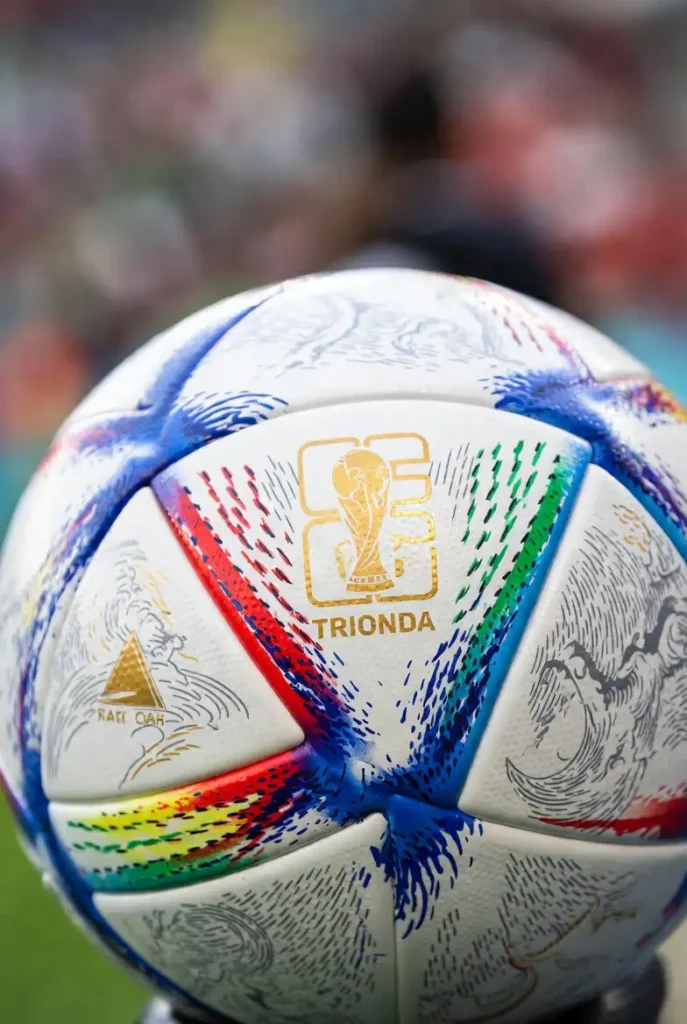
- Gold accents throughout → homage to the FIFA World Cup Trophy.
- Overall vibe: Energetic, modern, and playful — adidas calls it one of their most visually exciting World Cup balls ever.
(If you’re picturing it: think clean white base exploding into red-green-blue waves that swirl and meet in the middle — super eye-catching on TV!)
Construction & Innovative Technology
This is where TRIONDA levels up technically — fewer panels than ever for elite performance:
- Panel count: Only 4 thermally bonded polyurethane panels (fewest in World Cup history; echoes the 2014 Brazuca but even more streamlined).
- Surface: Seamless, with macro + micro debossed textures (embossed patterns) for:
- Better grip and control
- Improved swerve and stability
- Reduced water uptake (stays consistent even in rain)
- Aerodynamics: Fluid geometry + textured debossing = sharper, more predictable flight paths.
- Bladder: Butyl bladder for excellent air retention and shape consistency over 90+ minutes.
- Connected Ball Technology (big upgrade from 2022’s Al Rihla):
- Side-mounted IMU (inertial measurement unit) sensor chip (500Hz sampling rate).
- Sends ultra-precise movement data to VAR almost instantly → faster decisions on offsides, handballs, goals, etc.
- More accurate gameplay insights than previous connected balls.
Certified to the highest FIFA Quality Pro standard — weight, circumference, bounce, water absorption, and more all pass elite tests.
Performance on the Pitch
Players and testers describe it as:
- Fast and stable in flight
- Excellent touch and feel
- Predictable swerve and knuckle effects
- Reliable in all weather (low water uptake + textured grip)
It’s built for the biggest stage: high precision for long passes, free kicks, and those clutch moments. Some keepers have joked it’s “too unpredictable” — but that’s the sign of a great modern ball!
Availability & Versions (as of February 2026)
You can grab it right now:
- Trionda Pro (official match ball replica) — ~$160–$170 USD.
- League / Competition versions — slightly cheaper, still high-quality.
- Training ball — more durable stitching for everyday use. Available at adidas.com, Soccer.com, Dick’s Sporting Goods, Amazon, and major sports retailers worldwide.
(Pro tip: The Pro version is the closest to what the pros will use — worth it if you’re serious!)
Fun Facts & Legacy
- First World Cup ball with just 4 panels.
- Made with input from players across North America.
- Symbolizes unity in a massive tournament (48 teams!).
- Continues adidas’ iconic line: Telstar → Tango → Jabulani → Brazuca → Al Rihla → now Trionda.
What do you think, bro — ready to see this thing light up stadiums from Toronto to Mexico City to LA? Or are you team “old-school 32-panel balls were better”?
About the Author