The FIFA World Cup Golden Boot goes to the player who scores the most goals in each World Cup tournament. Since the first World Cup in 1930, this prestigious award has celebrated some of football’s greatest talents. Legendary players such as Pelé and Just Fontaine, as well as modern stars like Miroslav Klose, have earned the Golden Boot for their goals, skill, and consistency on football’s biggest stage.
we list all FIFA World Cup Golden Boot winners from 1930 to 2022 and highlight records, trivia, and trends in World Cup goal scoring. Click here for 2026 FIFA world cup Teams format.
What is the FIFA World Cup Golden Boot?
FIFA awards the Golden Boot to the player who scores the most goals in a single World Cup tournament. FIFA officially introduced this award in 1982 and later recognized the top scorers of earlier tournaments.
Key points:
- The tournament’s highest scorer wins the Golden Boot
- If players tie on goals, FIFA uses assists and minutes played to determine the winner
- The award highlights a player’s offensive skill and decisive impact
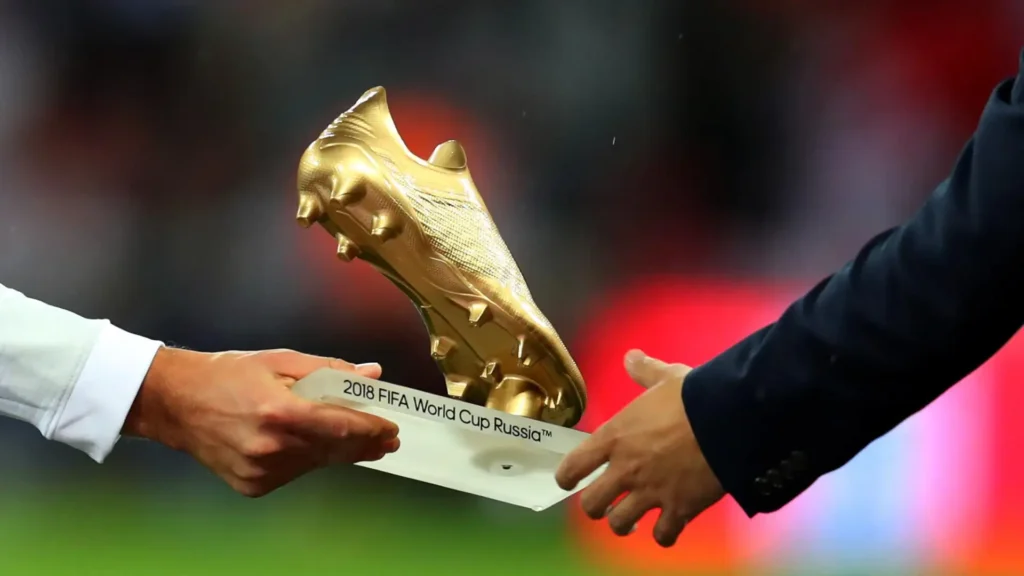
Complete FIFA World Cup Golden Boot Winners (1930–2022)
| Year | Host | Player | Country | Goals |
|---|---|---|---|---|
| 1930 | Uruguay | Guillermo Stábile | Argentina | 8 |
| 1934 | Italy | Oldřich Nejedlý | Czechoslovakia | 5 |
| 1938 | France | Leônidas | Brazil | 7 |
| 1950 | Brazil | Ademir | Brazil | 8 |
| 1954 | Switzerland | Sándor Kocsis | Hungary | 11 |
| 1958 | Sweden | Just Fontaine | France | 13 |
| 1962 | Chile | Flórián Albert | Hungary | 4 |
| 1966 | England | Eusébio | Portugal | 9 |
| 1970 | Mexico | Gerd Müller | Germany | 10 |
| 1974 | West Germany | Grzegorz Lato | Poland | 7 |
| 1978 | Argentina | Mario Kempes | Argentina | 6 |
| 1982 | Spain | Paolo Rossi | Italy | 6 |
| 1986 | Mexico | Gary Lineker | England | 6 |
| 1990 | Italy | Salvatore Schillaci | Italy | 6 |
| 1994 | USA | Oleg Salenko / Hristo Stoichkov | Russia / Bulgaria | 6 |
| 1998 | France | Davor Šuker | Croatia | 6 |
| 2002 | South Korea / Japan | Ronaldo | Brazil | 8 |
| 2006 | Germany | Miroslav Klose | Germany | 5 |
| 2010 | South Africa | Thomas Müller | Germany | 5 |
| 2014 | Brazil | James Rodríguez | Colombia | 6 |
| 2018 | Russia | Harry Kane | England | 6 |
| 2022 | Qatar | Kylian Mbappé | France | 8 |
Note: Players with tied goals are sometimes awarded based on assists or minutes played.
Records & Trivia About Golden Boot Winners
- Most Goals in a Single World Cup: Just Fontaine (France, 1958) – 13 goals
- Most Goals in Total World Cups: Miroslav Klose (Germany) – 16 goals across 4 tournaments
- Youngest Golden Boot Winner: Pelé (Brazil, 1958) – age 17
- Oldest Golden Boot Winner: Harry Kane (England, 2018) – age 24
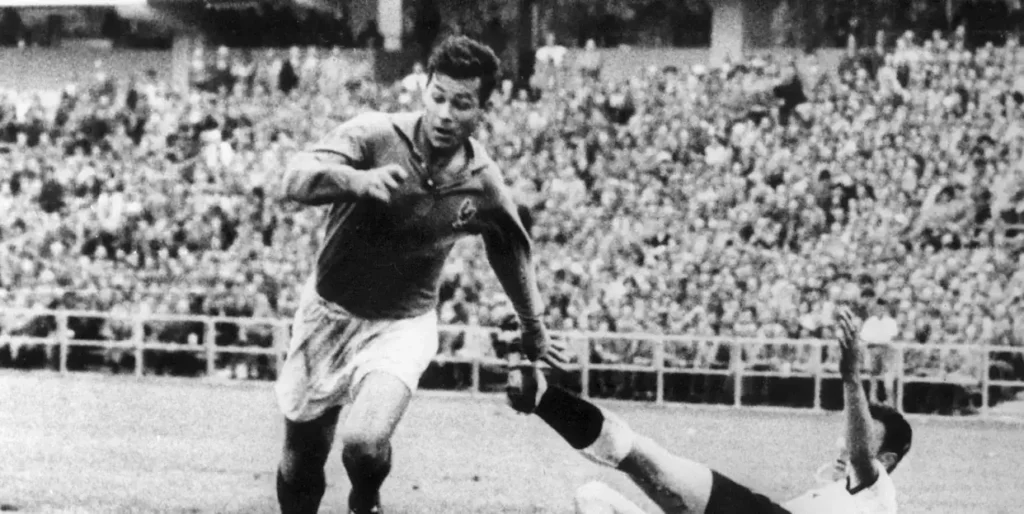
Trends Over the Decades
- Early World Cups (1930–1950s) had higher goal averages due to more attacking play.
- The 1960s–1980s saw more balanced defensive tactics, lowering individual scoring.
- Modern tournaments show more tactical diversity, with goals distributed among several players.
How the Golden Boot is Decided
- Total Goals Scored – the primary criteria
- Assists – if goals are tied
- Minutes Played – fewer minutes taken is preferred
- FIFA Fair Play Points – rarely used as a tiebreaker
Famous Golden Boot Winners
- Just Fontaine – 1958, 13 goals
- Miroslav Klose – 2006, 5 goals (cumulative World Cup record: 16 goals)
- Pelé – 1958, youngest scorer
- Ronaldo (Brazil) – 2002, 8 goals
- Harry Kane (England) – 2018, 6 goals
FAQs About FIFA World Cup Golden Boot
Guillermo Stábile of Argentina scored 8 goals in 1930.
Just Fontaine of France scored 13 goals in 1958.
FIFA uses assists and minutes played as tiebreakers.
Miroslav Klose of Germany scored 16 goals across 4 World Cups.
Germany and Brazil lead with multiple winners over the decades.
About the Author

My spouse and I stumbled over here from a different website
and thought I may as well check things out. I like what I see so now i am following
you. Look forward to looking into your web page repeatedly.