The FIFA World Cup is the biggest sporting event in the world, attracting millions of viewers globally. The 2022 World Cup in Qatar brought unforgettable moments, while the upcoming 2026 edition promises even bigger excitement and changes. From host countries to tournament format and star players, there are several key differences between these two editions. In this article, we break down everything you need to know about 2022 vs 2026 FIFA World Cup.
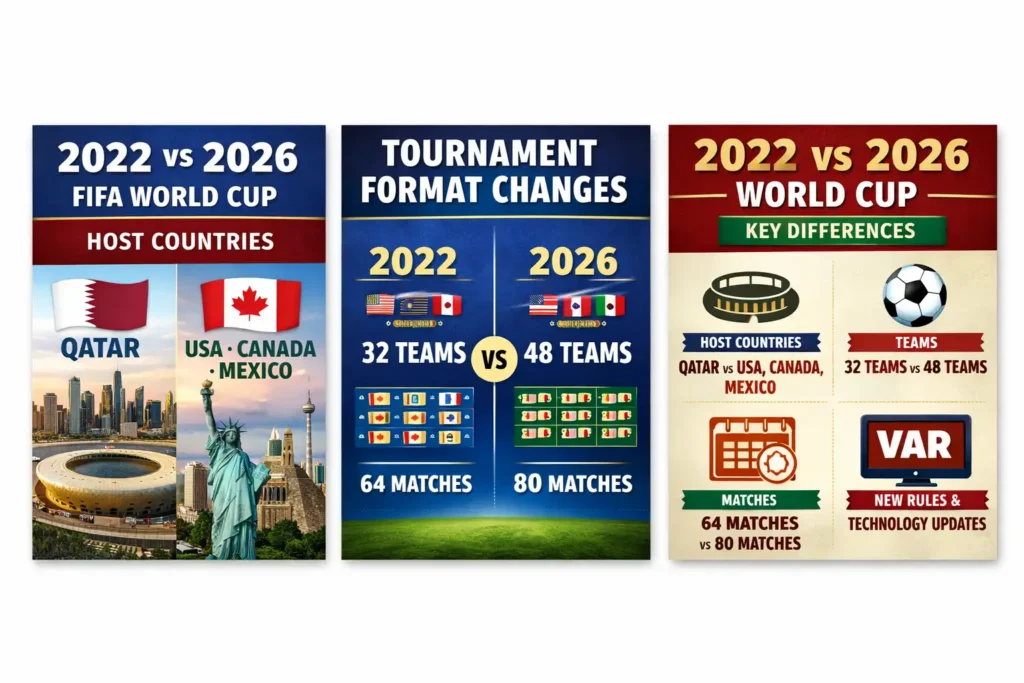
Host Country Differences
2022 FIFA World Cup – Qatar:
- First-ever Middle Eastern country to host the World Cup.
- Matches held in 8 modern stadiums, equipped with cooling technology due to the desert heat.
- Compact tournament: most stadiums were close to each other, allowing fans to watch multiple matches in a single day.
2026 FIFA World Cup – USA, Canada & Mexico:
- First World Cup hosted by three countries.
- Larger stadiums, more fan zones, and diverse cultural experiences.
- Matches spread across multiple time zones, allowing a truly global viewing experience.
Key Takeaway: The 2026 edition will be more geographically spread out, offering fans a different atmosphere and travel experience compared to the compact 2022 World Cup.
Tournament Format Changes
2022 Format:
- 32 teams divided into 8 groups of 4.
- Top 2 teams from each group advanced to Round of 16.
- Total of 64 matches played.
2026 Format:
- Expanding to 48 teams, divided into 16 groups of 3.
- Top 2 teams from each group advance to a Round of 32.
- Total of 80 matches, allowing more nations to participate and creating a more competitive tournament.
Impact: More matches and teams mean a higher chance for emerging football nations to make a mark. Fans can expect more diverse matchups and exciting surprises.
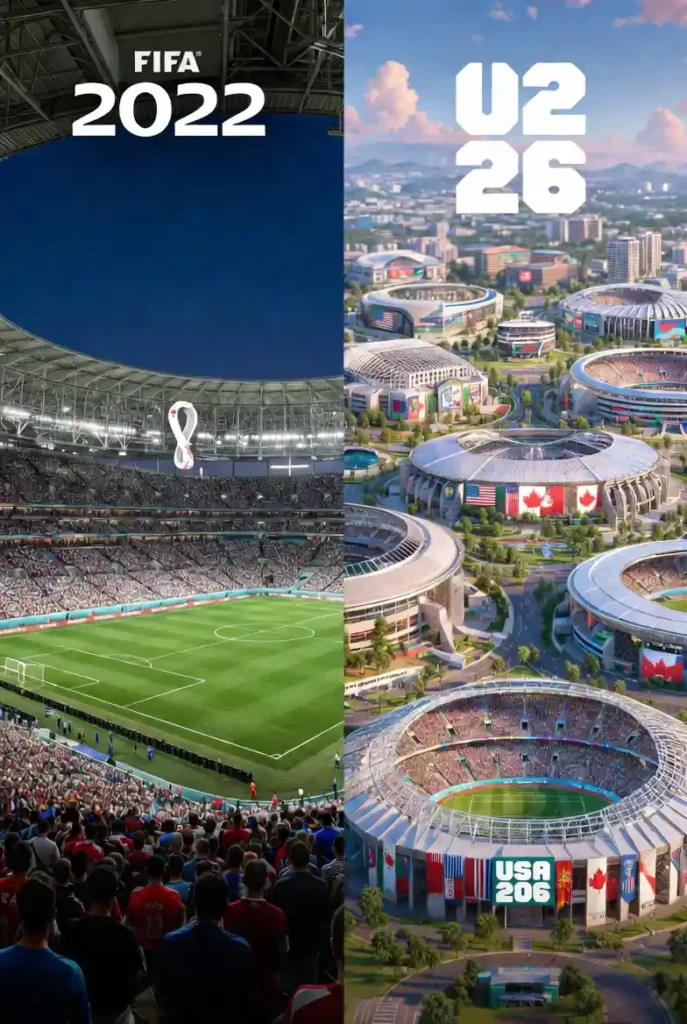
Rule and Technology Updates
- VAR & Goal-Line Technology: Both tournaments use Video Assistant Referee (VAR) and goal-line technology, but FIFA is refining VAR decision speed for smoother matches in 2026.
- Substitution Rules: Temporary changes in substitutions during extra time in 2022 may become standard in 2026.
- Other Updates: Any changes will aim to enhance fairness and player safety, making matches more exciting and transparent for fans.
Teams and Player Differences
- 2022 Highlights:
- Star players like Lionel Messi and Kylian Mbappé dominated headlines.
- Traditional powerhouses like Brazil, Germany, and France performed strongly.
- 2026 Expectations:
- With 48 teams, new nations are likely to make their World Cup debut.
- Emerging talents will shine, potentially reshaping global football dynamics.
- Bigger squads and more matches mean fans will see a mix of legends and rising stars.
Key Takeaway: 2026 will showcase a wider pool of talent, giving more nations a chance to compete at the highest level.
Schedule and Match Differences
- 2022: 32 matches played over ~28 days. Compact schedule allowed for easy tracking by fans.
- 2026: 48 teams and 80 matches over roughly 32–35 days.
- Effect: More matches may require fans to follow matches digitally or through live trackers for convenience.
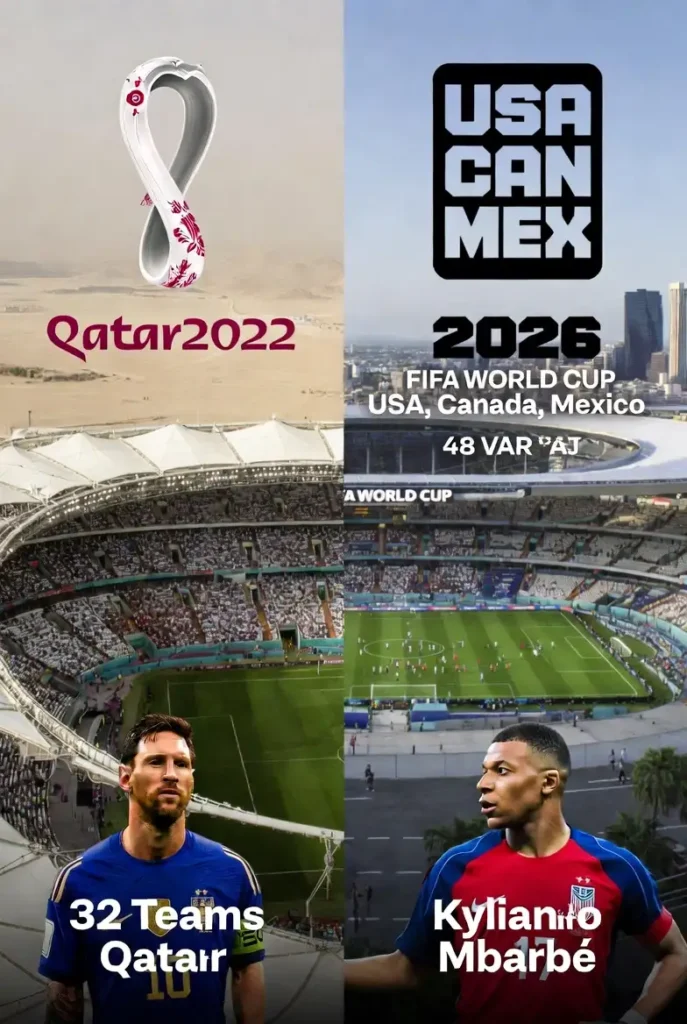
Fan Experience & Global Impact
- 2022: Fans enjoyed close stadium proximity and unique Middle Eastern culture.
- 2026: Expect larger stadiums, more fan zones, and diverse cultural experiences across three countries.
- Broadcast and streaming innovations will provide better global access to matches.
Trivia: The USA hosting in 2026 may attract record-breaking international viewers, as football continues to grow in popularity in North America.
Interesting Trivia & Fun Facts
- 2022: Qatar became the first Middle Eastern host; winter schedule was unusual for football fans.
- 2026: First three-nation host and largest tournament by team count in FIFA history.
- Fun Fact: Fans can potentially watch matches in three different countries in one trip, a unique experience compared to previous tournaments.
Conclusion
The 2022 and 2026 FIFA World Cups differ significantly in hosts, format, teams, and fan experience. While Qatar 2022 offered a compact, historic experience, the 2026 tournament promises a larger, more inclusive, and exciting spectacle. Football fans around the world have a lot to look forward to as the beautiful game continues to evolve.
FAQ Section
48 teams, up from 32 in 2022.
The tournament will be hosted by USA, Canada, and Mexico.
The expansion from 32 to 48 teams and the multi-nation hosting format.
Yes, VAR will be used with refined technology for faster and more accurate decisions.
About the Author