The 2026 FIFA World Cup is set to become the biggest tournament in football history. For the first time ever, the competition will be hosted by three countries — the United States, Canada, and Mexico.
With 48 national teams, dozens of matches, and millions of traveling fans, the tournament needs world-class venues. That’s why 16 stadiums across North America were selected to host the games.
In this guide, you’ll find the complete World Cup 2026 stadiums list, along with details about the host cities, stadium capacity, and what makes each venue special. Whether you’re planning to attend matches or simply want to learn more about the tournament venues, this article will walk you through everything in a simple and easy-to-understand way.

How Many Stadiums Will Host the World Cup 2026?
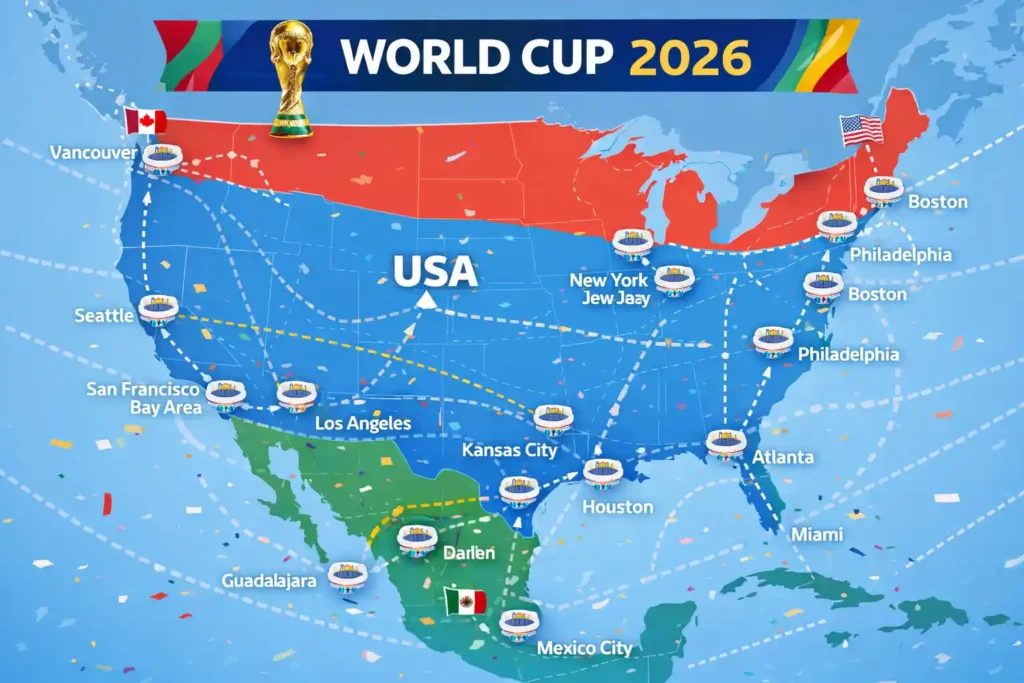
The global tournament organized by FIFA will take place in 16 stadiums located in 16 host cities.
Here’s the breakdown:
- 11 stadiums in the United States
- 3 stadiums in Mexico
- 2 stadiums in Canada
These venues were selected after a detailed evaluation process that considered infrastructure, fan experience, transportation access, and stadium capacity.
Many of these stadiums already host major sporting events such as NFL games, international football matches, and global tournaments. Parking at World Cup 2026 Stadiums: Tips, Maps & Fan Guide
Complete World Cup 2026 Stadiums List
Below is a simple table showing all the stadiums selected for the tournament.
| Stadium | City | Country | Capacity |
|---|---|---|---|
| MetLife Stadium | New York / New Jersey | USA | 82,500 |
| SoFi Stadium | Los Angeles | USA | 70,000 |
| AT&T Stadium | Dallas | USA | 80,000 |
| Mercedes-Benz Stadium | Atlanta | USA | 71,000 |
| Lumen Field | Seattle | USA | 69,000 |
| Levi’s Stadium | San Francisco Bay Area | USA | 68,500 |
| Hard Rock Stadium | Miami | USA | 65,000 |
| Lincoln Financial Field | Philadelphia | USA | 69,000 |
| NRG Stadium | Houston | USA | 72,000 |
| Arrowhead Stadium | Kansas City | USA | 76,000 |
| Gillette Stadium | Boston Area | USA | 65,000 |
| Estadio Azteca | Mexico City | Mexico | 87,500 |
| Estadio BBVA | Monterrey | Mexico | 53,500 |
| Estadio Akron | Guadalajara | Mexico | 49,800 |
| BC Place | Vancouver | Canada | 54,000 |
| BMO Field | Toronto | Canada | 45,000 |
Each stadium offers a unique atmosphere, and together they will create an unforgettable World Cup experience.
Stadiums in the United States
The United States will host the majority of matches. These stadiums are spread across major cities, making it easier for fans from around the world to attend games.
MetLife Stadium – New York / New Jersey
MetLife Stadium is one of the largest venues in the tournament and is expected to play a major role in the World Cup.
Key highlights:
- Capacity of more than 82,000 fans
- Located close to New York City
- Excellent transport connections
- Regular host of major sporting events
Because of its size and location, many experts believe it could host the World Cup final.
SoFi Stadium – Los Angeles
SoFi Stadium is one of the newest and most advanced stadiums in the world.
What makes it special:
- Stunning modern architecture
- Huge 360-degree video board
- Open-air design with a roof canopy
- Built with cutting-edge technology
It represents the future of sports stadium design.
AT&T Stadium – Dallas
AT&T Stadium is famous for its enormous structure and impressive fan experience.
Important features:
- Retractable roof
- One of the world’s largest video screens
- Huge seating capacity
This venue is expected to host high-profile knockout matches during the tournament.
Mercedes-Benz Stadium – Atlanta
Mercedes-Benz Stadium stands out because of its unique design.
Highlights include:
- Retractable roof shaped like a camera lens
- Advanced digital fan experience
- One of the most innovative stadiums in North America
Lumen Field – Seattle
Lumen Field is famous for its incredibly loud and passionate fans.
Seattle has a strong football culture, and visiting supporters can expect an amazing match atmosphere.
Levi’s Stadium – San Francisco Bay Area
Levi’s Stadium is located in Silicon Valley and is known for its smart stadium technology.
Key features include:
- Eco-friendly design
- Solar power systems
- Advanced mobile connectivity
Hard Rock Stadium – Miami
Hard Rock Stadium has hosted many major sporting events over the years.
The stadium is famous for:
- International football matches
- Super Bowl games
- Global entertainment events
Its warm climate and vibrant culture make Miami a popular destination for fans.
Lincoln Financial Field – Philadelphia
Lincoln Financial Field will bring the passionate sports culture of Philadelphia to the tournament.
Fans here are known for their loud and energetic support.
NRG Stadium – Houston
NRG Stadium features a retractable roof and modern facilities.
Houston is also one of the most diverse cities in the United States, making it a welcoming destination for international fans.
Arrowhead Stadium – Kansas City
Arrowhead Stadium is widely known for having one of the loudest crowds in sports.
Kansas City is also becoming a growing hub for football in North America.
Gillette Stadium – Boston Area
Gillette Stadium represents the northeastern region of the United States.
The stadium regularly hosts international football matches and major sports events.
Stadiums in Mexico
Mexico has a deep football tradition, and its stadiums are some of the most historic venues in the sport.
Estadio Azteca – Mexico City
Estadio Azteca is one of the most iconic stadiums in football history.
Interesting facts:
- Hosted the 1970 and 1986 World Cup finals
- Famous for legendary matches involving Diego Maradona
- One of the largest football stadiums in the world
In 2026, it will become the first stadium ever to host matches in three different World Cups. Smallest Country to Qualify for FIFA World Cup 2026
Estadio BBVA – Monterrey
Estadio BBVA is one of the most modern stadiums in Latin America.
Highlights:
- Beautiful mountain backdrop
- Modern architecture
- Excellent fan experience
Estadio Akron – Guadalajara
Estadio Akron is known for its unique design inspired by a volcano shape. Guadalajara is considered one of Mexico’s biggest football cities.

Stadiums in Canada
Canada will host World Cup matches in two major cities.
BC Place – Vancouver
BC Place is a modern stadium with a retractable roof.
The venue offers beautiful views of Vancouver’s surrounding mountains and waterfront.
BMO Field – Toronto
BMO Field will be upgraded to host World Cup matches.
Toronto is the largest city in Canada and a major destination for international sports events.
Which Stadium Will Host the World Cup 2026 Final?
Although multiple venues are capable of hosting the final. MetLife Stadium is widely seen as the most likely option.
Reasons include:
- Massive seating capacity
- Easy access from international airports
- Location near one of the world’s biggest cities
Hosting the final would place the stadium at the center of global football attention.
What Makes the 2026 World Cup Stadiums Special?
The venues selected for the tournament offer more than just seats and grass fields.
Fans will experience:
Modern Stadium Technology
Many stadiums feature:
- high-speed internet and 5G connectivity
- giant LED screens
- digital ticketing systems
Improved Fan Experience
Supporters will enjoy:
- modern seating areas
- large food courts
- entertainment zones
Sustainable Design
Several venues include eco-friendly systems such as:
- solar power
- energy-efficient lighting
- water recycling technology
Travel Tips for Visiting World Cup 2026 Stadiums
If you’re planning to attend matches in person, these simple tips can help.
Book Early
Fans will quickly book flights and hotels once the match schedule is announced.
Use Public Transport
Many host cities have excellent metro and train systems.
Arrive Early on Match Day
Large crowds and security checks can take time.
Explore the Cities
Each host city offers amazing food, culture, and sightseeing opportunities.
Final Thoughts
The 2026 FIFA World Cup will be one of the most exciting tournaments ever held. With 16 stadiums across the United States, Canada, and Mexico, the event will truly feel global.
From the historic atmosphere of Estadio Azteca to the modern innovation of SoFi Stadium, every stadium will play a role in creating unforgettable football moments.
Whether you’re planning a trip to the tournament or just following it from home, knowing the World Cup 2026 stadiums list gives you a better understanding of where football history will be made. ⚽
About the Author