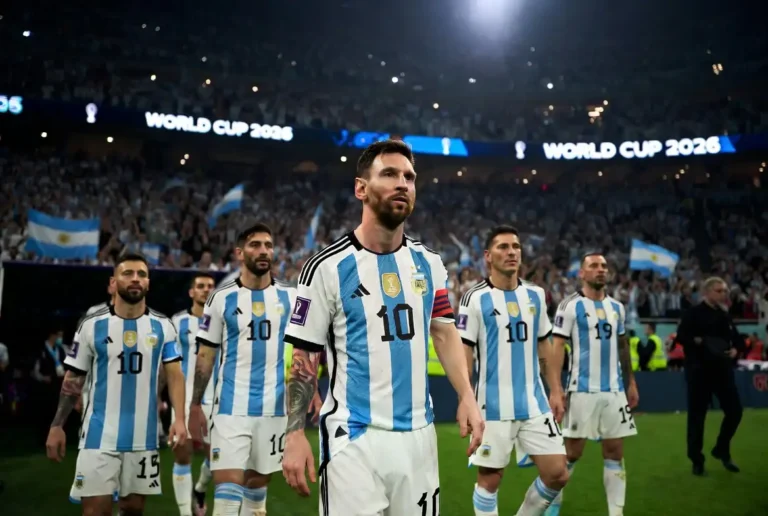
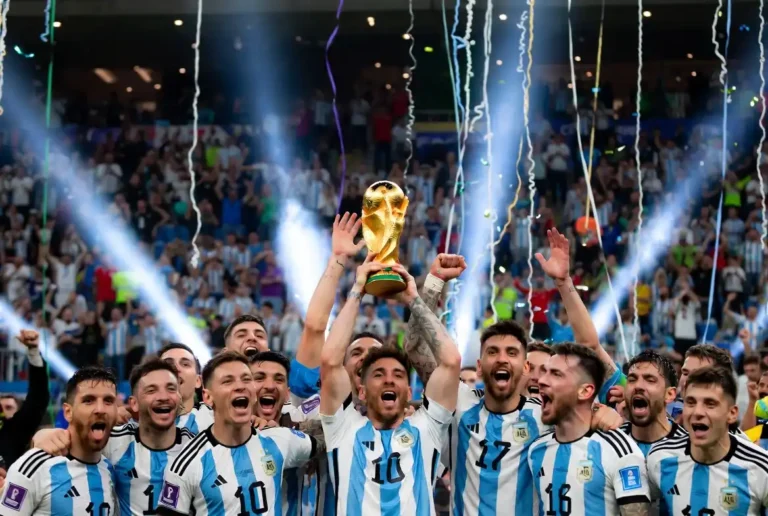
When FIFA World Cup 2022 ended, it wasn’t just another tournament wrapped up—it was the perfect ending to a story millions had followed for years. Argentina, led by the legendary Lionel Messi, finally lifted the trophy after decades of heartbreak.
But football never stands still.
Fast forward to 2026, and Argentina is no longer chasing glory—they’re defending it. The hunger is different, the pressure is heavier, and the team itself is evolving. This isn’t just a comparison of two squads; it’s the story of a transition—from a team built around a legend to one preparing for the future.
So, how much has really changed?
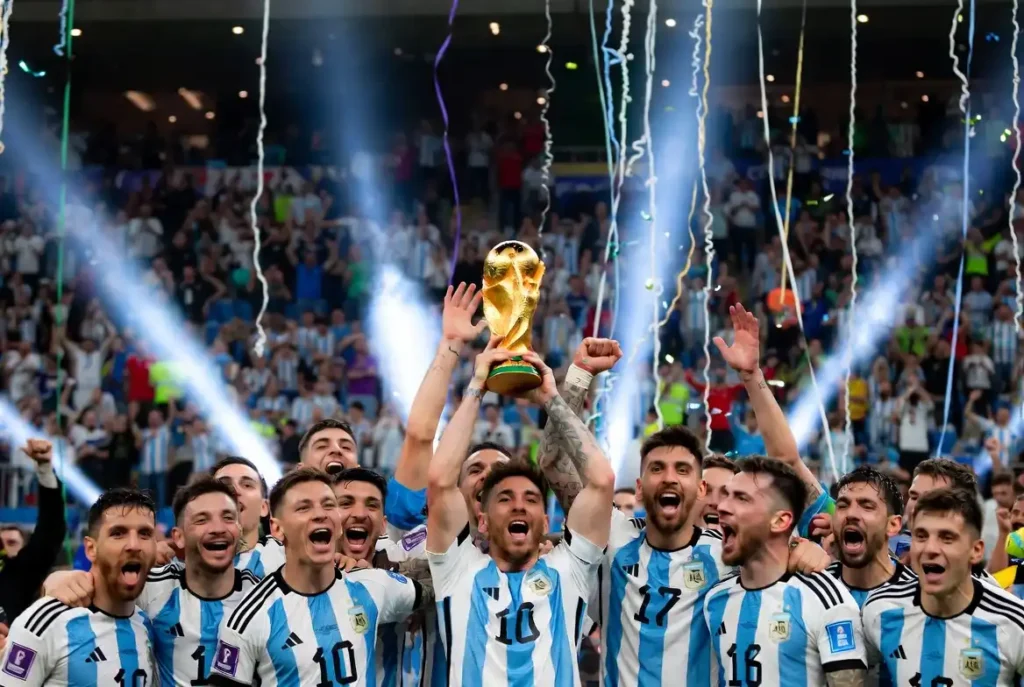
Argentina 2022 – The Perfect World Cup Story
Argentina’s 2022 campaign had everything: drama, resilience, and redemption.
After a shocking opening loss to Saudi Arabia, many doubted whether this team had what it takes. But under the calm leadership of Lionel Scaloni, Argentina slowly rebuilt momentum.
At the heart of it all was Messi—playing not just with skill, but with purpose. This was his last realistic chance to win the World Cup, and he delivered in every crucial moment.
Supporting him was a perfectly balanced squad:
- Ángel Di María brought experience and flair
- Emiliano Martínez became the hero in penalty shootouts
- A hardworking midfield led by Rodrigo De Paul kept the team ticking
Tactically, Argentina was compact, disciplined, and deadly on the counter. They knew when to attack and when to suffer—qualities that define champions.
The final against France will go down as one of the greatest matches in football history. And when Argentina lifted the trophy, it felt like a moment of destiny fulfilled.
What Changed After 2022?
Winning the World Cup is the peak—but it also marks the beginning of a transition.
Several key changes began to shape Argentina’s journey toward 2026:
1. Aging Core Players
Players like Messi and Di María entered the later stages of their careers. While still influential, their roles naturally began to shift.
2. Increased Expectations
In 2022, Argentina were contenders. In 2026, they are the team everyone wants to beat.
3. Tactical Adjustments
Opponents now understand Argentina better. The surprise factor is gone, forcing Scaloni to evolve his system.
4. Squad Rotation
Younger players started getting more minutes, especially in qualifiers and international friendlies.
This phase wasn’t about replacing legends overnight—it was about preparing the next generation without losing identity.
Argentina 2026 Squad – A New Generation Rising
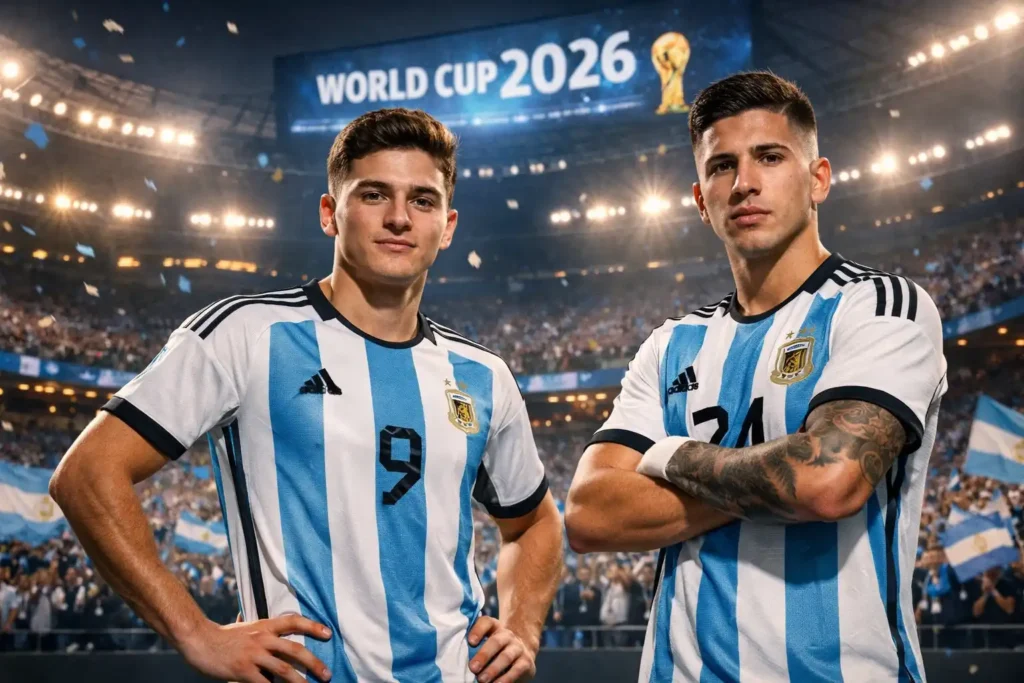
By the time the FIFA World Cup 2026 arrives, Argentina will look familiar—but also refreshingly different.
The New Leaders
- Julián Álvarez has grown into a reliable goal scorer
- Enzo Fernández now dictates the tempo in midfield
These players were part of the 2022 squad, but in 2026, they are no longer supporting characters—they are central figures.
Emerging Talents
Argentina’s youth pipeline continues to produce exciting prospects. New faces bring energy, speed, and fearlessness—qualities essential in modern football.
Messi’s Role in 2026
The biggest question remains: Will Messi still play?
Even if he does, his role will likely be more strategic—less running, more influence. Think of him as a playmaker who controls moments rather than dominates entire matches.
Tactical Evolution – Then vs Now
One of the most fascinating aspects of Argentina’s transformation is tactical.
2022 Approach
- Defensive solidity
- Quick counter-attacks
- Heavy reliance on Messi’s creativity
2026 Approach (Expected)
- More possession-based play
- Greater midfield control
- Flexible formations depending on the opponent
Scaloni has shown he’s not afraid to adapt. And that flexibility could be Argentina’s biggest strength in 2026.
Strengths Comparison: 2022 vs 2026
Argentina 2022 Strengths
- Peak Messi performance
- Strong team chemistry
- Mental resilience under pressure
Argentina 2026 Strengths
- Younger, more energetic squad
- Greater squad depth
- Players with experience of winning big tournaments
The shift is clear: from experience-driven success to a balance of youth and winning mentality.
Weaknesses & Challenges
No team is perfect—and Argentina will face challenges in 2026.
2022 Weaknesses
- Slow start in the tournament
- Occasional defensive lapses
2026 Concerns
- Lack of experience among younger players
- Managing expectations as defending champions
- Potential over-reliance on emerging stars
The pressure of defending a title can be heavier than winning it.
Key Players Then vs Now
Then (2022)
- Messi as the undisputed leader
- Di María providing creativity
- Martínez saving crucial penalties
Now (2026)
- Álvarez leading the attack
- Enzo controlling midfield
- Martínez still offering stability in goal
The leadership group is expanding—and that’s a positive sign for long-term success.
Can Argentina Defend Their Title in 2026?
Defending a World Cup title is one of the hardest challenges in football.
Teams like France, Brazil, and England will come prepared. The competition will be fierce, and every match will feel like a final.
However, Argentina has something special:
- A winning mentality
- A balanced squad
- A coach who understands tournament football
If everything clicks, they have a real chance to go far again.
But repeating 2022? That will require something extraordinary.
Conclusion: A Team Rebuilt, Not Replaced
Argentina’s journey from 2022 to 2026 isn’t about losing greatness—it’s about evolving it.
The magic of Messi may slowly fade, but the identity he helped build remains strong. The new generation isn’t starting from scratch—they’re building on a legacy.
And that’s what makes Argentina so dangerous.
They are no longer just a team with a superstar. They are a system, a culture, and a belief.
Whether they win again or not, one thing is certain: Argentina in 2026 will not just be defending a title—they’ll be defining their future.
About the Author