The FIFA World Cup 2026 is set to be historic. For the first time, the tournament will feature 48 teams, up from the traditional 32. This major change will reshape the group stage, knockout rounds, and qualification process. Fans across the globe are curious about how the new format works — from host countries to match schedules. In this guide, we explain everything you need to know about the new format of FIFA World Cup 2026.
Host Countries of FIFA World Cup 2026
The 2026 edition will be jointly hosted by:
- United States
- Canada
- Mexico
This will be the first World Cup hosted by three nations, creating excitement with multiple stadiums and cities hosting matches. Major venues include:
| Country | City | Stadium | Capacity |
|---|---|---|---|
| USA | New York City | MetLife Stadium | 82,500 |
| USA | Los Angeles | SoFi Stadium | 70,240 |
| Canada | Toronto | BMO Field | 30,000 |
| Mexico | Mexico City | Estadio Azteca | 87,000 |
Hosting across three countries allows more fans to attend and increases global visibility.
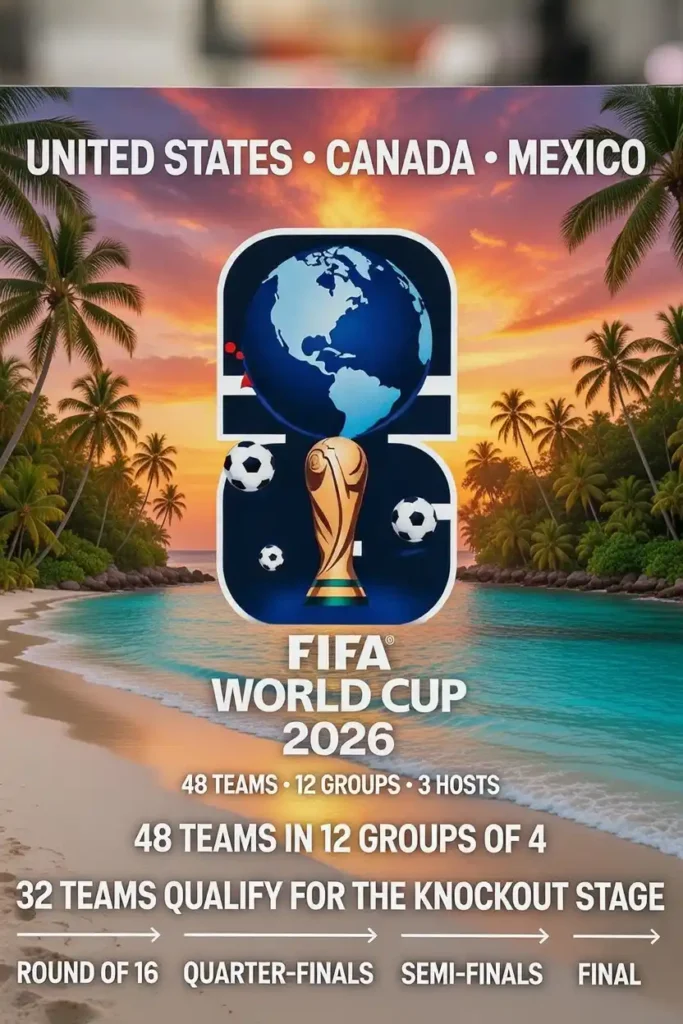
The New 48-Team Format
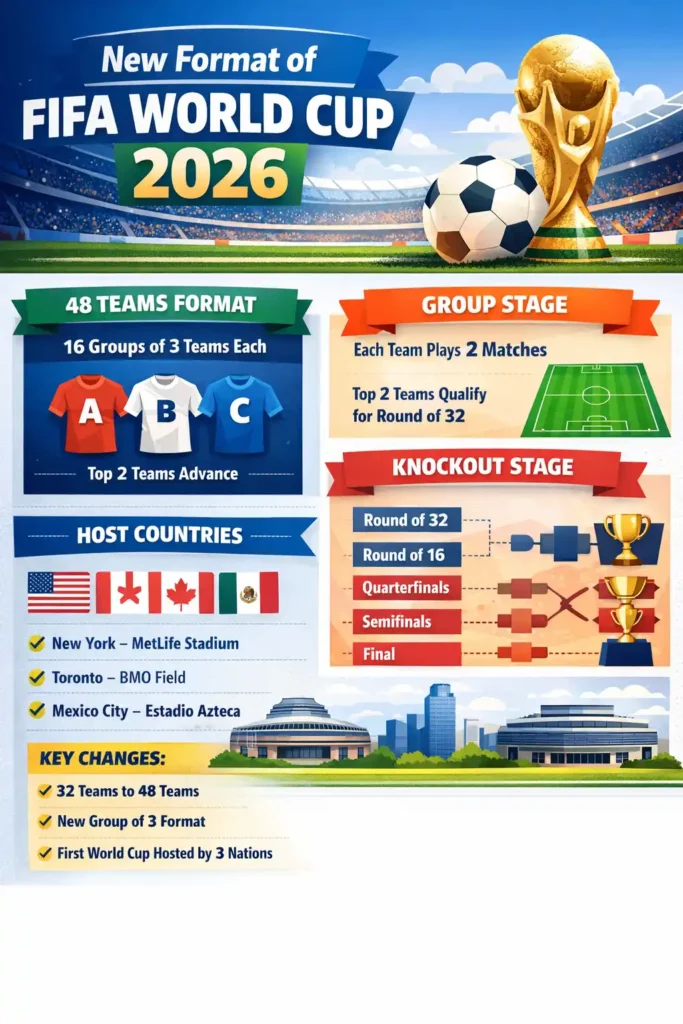
The 2026 FIFA World Cup will introduce 48 teams instead of 32, divided into 16 groups of 3 teams each. This structure is a significant shift from previous tournaments.
Group Stage
- 16 groups of 3 teams each
- Each team plays 2 matches in the group stage
- Top 2 teams from each group advance to the Round of 32
This setup reduces the total number of group stage matches per team but increases overall tournament participation. It ensures more nations experience the World Cup, expanding global appeal.
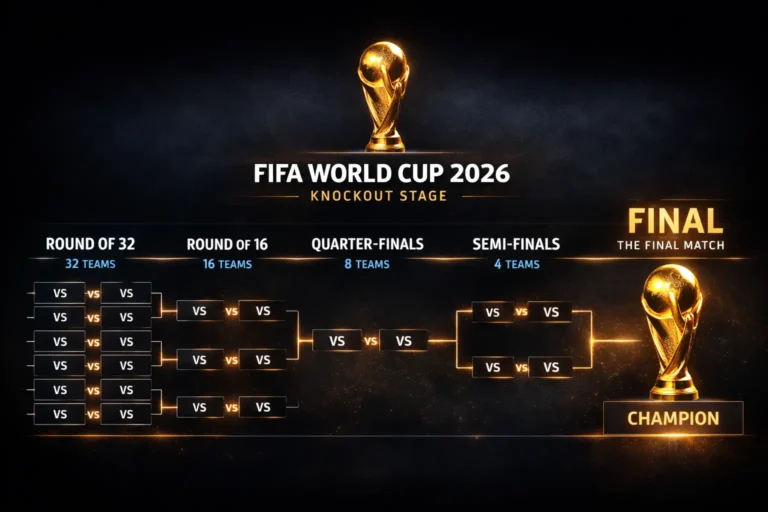
Knockout Stage
The Round of 32 kicks off after the group stage, followed by:
- Round of 16
- Quarter-finals
- Semi-finals
- Third-place playoff
- Final
With 32 teams advancing, the knockout rounds will remain intense and competitive, keeping fans engaged throughout the tournament.
Qualification for FIFA World Cup 2026
The qualification process has been updated to accommodate 48 teams:
- UEFA (Europe): 16 teams
- CAF (Africa): 9 teams
- AFC (Asia): 8 teams
- CONMEBOL (South America): 6 teams
- CONCACAF (North, Central America & Caribbean): 6 teams (host countries included)
- OFC (Oceania): 1 team
- Playoffs: 2 teams
This expanded format allows more nations from Africa, Asia, and North America to compete, giving new teams a chance to shine on the world stage.
Key Changes Compared to Previous World Cups
| Feature | 2022 World Cup | 2026 World Cup |
|---|---|---|
| Total Teams | 32 | 48 |
| Groups | 8 groups of 4 | 16 groups of 3 |
| Matches per Team in Group Stage | 3 | 2 |
| Knockout Round Start | Round of 16 | Round of 32 |
| Host Countries | 1 (Qatar) | 3 (USA, Canada, Mexico) |
The 2026 format allows more nations to participate but slightly reduces group stage matches per team, keeping the tournament exciting while expanding inclusivity.
Advantages of the New Format
- More Global Representation – More teams from Africa, Asia, and North America.
- Shorter Group Matches per Team – Keeps energy high and reduces fatigue.
- Economic Benefits – More host cities and stadiums, higher ticket sales, more tourism.
- Historic First – First 48-team tournament hosted by three nations.
Potential Challenges
- Scheduling Complexity – More teams mean longer tournament logistics.
- Group Stage Drama – Fewer matches per team might increase chances of tie-breakers.
- Travel Concerns – Fans may need to travel across countries to watch different matches.
Despite challenges, the new format is widely expected to boost fan engagement globally.
FAQs About FIFA World Cup 2026 Format
The tournament will feature 48 teams, up from 32 in previous editions.
There will be 16 groups of 3 teams each, with the top 2 from each group advancing to the knockout stage.
United States, Canada, and Mexico are co-hosting the event.
The knockout stage begins with a Round of 32, followed by the Round of 16, Quarter-finals, Semi-finals, and Final.
More teams from Africa, Asia, and North America will qualify, with a total of 48 nations competing.
About the Author