Every four years, the FIFA World Cup captures the attention of billions of football fans worldwide. Stadiums become packed, cities turn into football festivals, and television screens across the globe focus on one tournament. While fans enjoy the excitement, drama, and unforgettable moments, another massive story unfolds behind the scenes money. The FIFA World Cup is not only the biggest football tournament on Earth, but it is also one of the most profitable sporting events in the world. From billion-dollar broadcasting deals to sponsorship contracts with global brands, FIFA generates enormous revenue during every tournament cycle. Many fans wonder how FIFA makes money from the World Cup and why the organization earns billions from a single competition. The answer lies in a carefully built global business model that combines sports, entertainment, media, tourism, and digital marketing into one giant commercial machine.
In this article, we will break down FIFA’s biggest income sources, explain how the World Cup business works, and explore why the tournament has become one of the most valuable events in global sports.
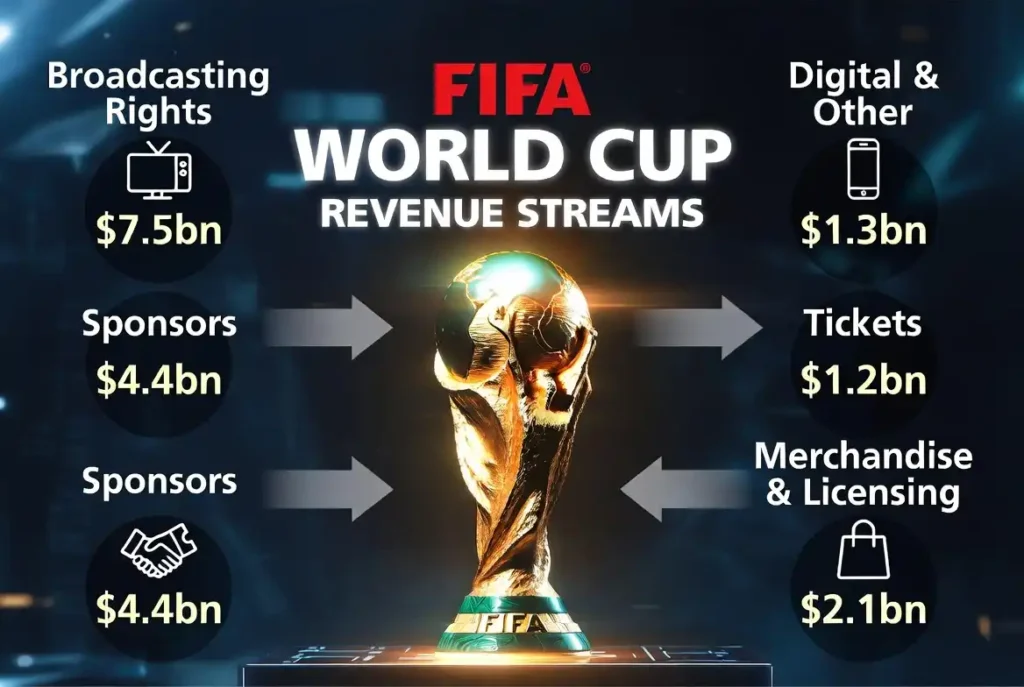
Broadcasting Rights: FIFA’s Biggest Source of Income
The largest portion of FIFA’s revenue comes from broadcasting rights. Television networks and streaming companies pay huge amounts of money to secure the rights to show World Cup matches in their countries.
Broadcasting rights are extremely valuable because the FIFA World Cup attracts billions of viewers worldwide. The final alone often becomes one of the most-watched sporting events in history. Companies understand that millions of fans will tune in live, making the tournament a goldmine for advertising and subscriptions. Major broadcasters compete aggressively for these rights. Networks spend billions because they know football fans are willing to watch every match, highlight, analysis show, and pre-game program. The larger the audience, the more advertising revenue these broadcasters can generate.
Streaming has also transformed FIFA’s revenue model. Digital platforms now compete alongside traditional TV companies for global football audiences. Online streaming services, mobile apps, and sports platforms have increased the value of World Cup media rights even further. For the 2026 FIFA World Cup, experts expect broadcasting revenue to reach record-breaking levels because the tournament will feature 48 teams instead of 32. More matches mean more content, larger audiences, and greater commercial opportunities.
Sponsorships and Brand Partnerships
Another major reason why FIFA earns billions is sponsorships. Global companies pay enormous fees to associate their brands with the World Cup because the tournament offers unmatched international exposure. The World Cup reaches fans from almost every country. This global audience gives sponsors a powerful opportunity to market their products on the biggest stage in football.
Some of FIFA’s biggest commercial partners include:
- Coca-Cola
- Adidas
- Visa
- Hyundai Motor Company
- Qatar Airways
These companies spend millions to display their logos inside stadiums, during TV broadcasts, on digital content, and across official FIFA campaigns.
Sponsorship deals usually include:
- Advertising rights
- Official branding partnerships
- Product exclusivity
- Stadium promotions
- Social media campaigns
- Fan engagement programs
For brands, the World Cup is a massive marketing opportunity. Football fans are emotionally connected to the tournament, which makes advertising more effective. Companies know that associating with football creates stronger emotional relationships with consumers. FIFA benefits because sponsors are willing to pay premium prices for visibility during the tournament. Sponsorship revenue continues to grow as football becomes more global every year.
Ticket Sales and Hospitality Packages
Ticket sales are another important revenue stream for FIFA. Millions of fans apply for tickets every World Cup, and many matches sell out quickly.
World Cup ticket pricing depends on several factors:
- Match importance
- Stadium capacity
- Team popularity
- Seating category
- Tournament stage
Final matches and knockout games often become the most expensive tickets because global demand is extremely high. Beyond regular tickets, FIFA also earns money through hospitality packages. These premium experiences target wealthy fans, celebrities, corporations, and business clients who want luxury access during the tournament.
Hospitality packages may include:
- VIP seating
- Private lounges
- Fine dining
- Exclusive stadium access
- Business networking opportunities
- Premium transportation services
Corporate hospitality has become one of the fastest-growing areas of sports revenue. Many businesses use World Cup events to entertain clients and partners. The expanded format of the 2026 World Cup could significantly increase ticket revenue because more teams and matches will create additional opportunities for fan attendance across the United States, Canada, and Mexico.
Merchandise and Licensing Deals
FIFA also earns huge profits from merchandise and licensing agreements. Fans love buying official World Cup products because they want to feel connected to the tournament and support their favorite teams.
Popular World Cup merchandise includes:
- Official match balls
- National team jerseys
- Scarves and flags
- Football boots
- Collectibles
- Video games
- Fan accessories
One of FIFA’s biggest merchandise partners is Adidas, which produces official match balls and many national team kits. Licensing is another powerful business strategy. FIFA allows companies to use World Cup branding on products in exchange for royalty payments. This means FIFA earns money without directly manufacturing every item itself.
The popularity of football gaming has also boosted FIFA’s commercial success. Football video games generate millions in sales and keep fans connected to the sport year-round. Merchandise sales increase dramatically during the tournament because fans become emotionally invested in their teams. Winning moments, famous goals, and iconic players often inspire huge spikes in product demand.
Digital Revenue and Online Growth
The digital world has become a major source of FIFA income. Social media, streaming platforms, mobile apps, and online advertising now play a huge role in football business.
FIFA controls enormous digital audiences across platforms like:
- YouTube
- TikTok
- X (Twitter)
Billions of fans interact with football content online during the World Cup. Match highlights, player interviews, goals, memes, and behind-the-scenes videos generate massive engagement.
This digital attention creates valuable advertising opportunities. Brands pay FIFA for:
- Sponsored content
- Social media promotions
- Online advertisements
- Digital campaigns
- App sponsorships
Streaming platforms have also changed how fans consume football. Younger audiences increasingly watch matches online instead of traditional television. FIFA has adapted by expanding its digital strategy and improving online fan experiences. The organization also earns revenue from official mobile apps, fantasy football games, and exclusive digital content subscriptions. As technology continues to evolve, digital revenue will likely become even more important for future World Cups.
Host Countries and Economic Investments
Hosting a World Cup requires enormous investment from host nations. Governments spend billions building stadiums, transportation systems, hotels, airports, and tourism infrastructure. Although FIFA does not directly pay for most infrastructure projects, the organization benefits financially from hosting agreements and tournament operations.
The 2026 FIFA World Cup will be hosted across:
- United States
- Canada
- Mexico
This multi-country hosting model reduces financial pressure on one nation while expanding commercial opportunities across North America.
Host countries expect the World Cup to boost:
- Tourism
- International visibility
- Hotel industries
- Local businesses
- Transportation sectors
- Job creation
While some nations profit economically from hosting, others struggle with high costs after the tournament ends. However, FIFA itself generally remains financially secure because much of its income comes from global media and sponsorship agreements rather than stadium construction.
FIFA Prize Money vs FIFA Profits
Many fans are surprised when they compare FIFA’s profits with the prize money awarded to teams.
FIFA distributes significant prize money during the World Cup, but the organization still keeps massive profits after operational expenses. Teams receive financial rewards based on tournament performance, while clubs also receive compensation for releasing players. However, FIFA’s total earnings from broadcasting, sponsorships, and commercial rights are far larger than the money distributed to participating teams.
Tournament costs include:
- Stadium operations
- Security
- Event management
- Marketing
- Staff salaries
- Technology systems
- Refereeing operations
Even after these expenses, FIFA still generates enormous financial surpluses.
Critics sometimes argue that FIFA should invest more money into grassroots football, smaller nations, and player development programs. FIFA responds by highlighting its global football investment initiatives and development projects.
How FIFA Uses the Money
FIFA claims that much of its revenue is reinvested into football development worldwide. The organization funds programs designed to improve football infrastructure, coaching, youth development, and women’s football.
Areas supported by FIFA include:
- Grassroots football
- Youth academies
- Referee development
- Women’s football competitions
- Training centers
- Football facilities
- Global football education
Smaller football nations often depend on FIFA funding to improve local football systems. Development grants help build pitches, organize youth leagues, and train coaches.
FIFA also invests heavily in expanding women’s football globally. Recent years have seen growing attention and investment in women’s tournaments, sponsorships, and media coverage. Still, debates continue about transparency and financial management inside FIFA. Fans and analysts frequently question how football revenue should be distributed across the global game.
Despite criticism, FIFA remains one of the most financially powerful sports organizations in the world.
Why the 2026 World Cup Could Make Even More Money
The 2026 FIFA World Cup could become the richest World Cup in history.
Several factors could drive record-breaking revenue:
- Expanded 48-team format
- More matches
- Bigger global audience
- Larger sponsorship opportunities
- Increased ticket sales
- Greater streaming demand
North America also offers huge commercial potential because of its massive sports market and advanced infrastructure.
The tournament could attract millions of international tourists while generating enormous digital engagement worldwide. Football’s growing popularity in the United States may further increase sponsorship and broadcasting value. Major brands already see the 2026 World Cup as a historic marketing opportunity. As football continues expanding globally, FIFA’s business model will likely become even more profitable in the future.
Conclusion
The FIFA World Cup is far more than just a football tournament. It is a global entertainment and business empire that generates billions through broadcasting rights, sponsorships, ticket sales, merchandise, and digital platforms. FIFA has built a financial system that turns football passion into massive global revenue. Every match, advertisement, social media post, and sponsorship campaign contributes to the tournament’s commercial success.
With the upcoming 2026 FIFA World Cup expected to break records in audience size and revenue, FIFA’s financial power will likely continue growing for years to come. For fans, the World Cup delivers unforgettable football moments. For FIFA, it remains one of the most profitable sporting events on the planet.
FAQs
FIFA earns billions of dollars from broadcasting rights, sponsorships, ticket sales, and commercial partnerships during every World Cup cycle.
Broadcasting rights are FIFA’s largest revenue source because global TV and streaming companies pay huge fees to air World Cup matches.
Some host nations benefit from tourism and global exposure, while others face financial challenges due to high infrastructure costs.
Brands sponsor FIFA because the World Cup offers access to billions of football fans worldwide.
Most experts expect the 2026 tournament to generate record revenue due to the expanded 48-team format and larger global audience.
About the Author