The FIFA World Cup 2026 Groups Draw is more than just a formal event—it’s the moment where the entire tournament begins to take shape. Before a single ball is kicked, fans, analysts, and teams already start predicting winners, spotting tough groups, and identifying potential surprises.
With the biggest expansion in World Cup history, the 2026 draw will carry even more weight than ever before. One lucky placement can ease a team’s path, while a difficult group could end dreams early.
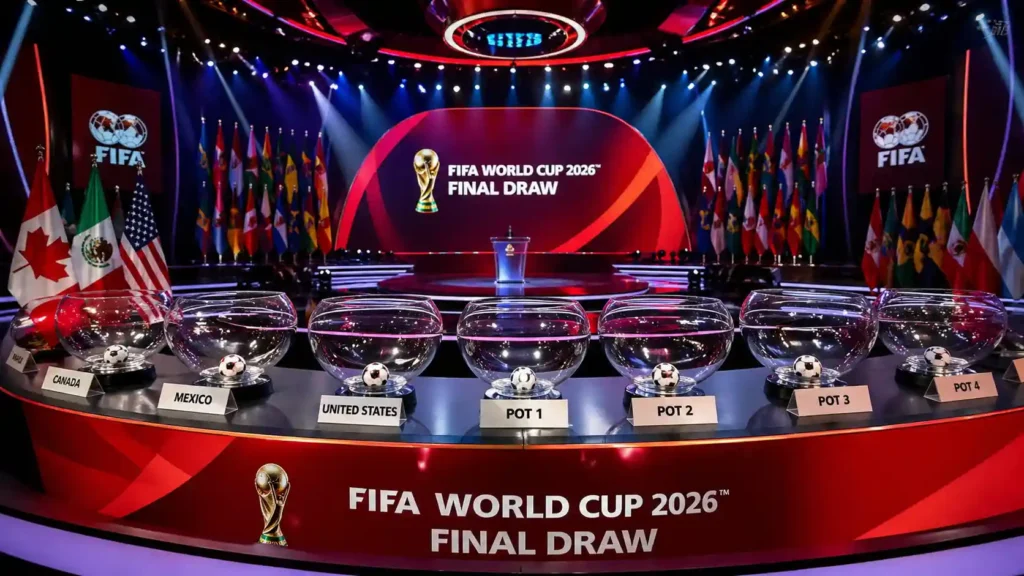
The FIFA World Cup 2026 groups draw explained is simple but important: with the new 48-team format, teams will be divided into 12 groups (Group A to Group L), each containing four teams selected through a structured draw process based on FIFA rankings and regional rules to avoid too many teams from the same confederation in one group; the draw uses seeded pots where top-ranked teams are placed first, ensuring balance and fairness, and after the group stage, the top two teams from each group plus the eight best third-placed teams will advance to the knockout rounds, making the draw crucial because it can create “groups of death” or easier paths, ultimately shaping the entire tournament journey from the very first match.
World Cup 2026 Format Explained (48-Team Revolution)
The 2026 edition introduces a brand-new format:
- 48 teams (up from 32)
- 12 groups of 4 teams each
- Top teams advance to a Round of 32
This change means:
- More matches
- More opportunities for smaller nations
- Increased chances of unexpected results
The draw becomes even more crucial because the structure is larger and more complex.
When Will the World Cup 2026 Draw Take Place?
While the exact date is expected to be officially confirmed by FIFA, the draw will likely happen in late 2025.
Traditionally, FIFA organizes the draw several months before the tournament to finalize match schedules and logistics.
Where Will the Draw Be Held?
The draw is expected to take place in the United States, one of the main host countries. Cities like:
- Los Angeles
- New York
- Dallas
are strong candidates due to their global appeal and infrastructure.
The event itself is a grand spectacle, featuring football legends, live performances, and worldwide media coverage.
How the Draw Works (Step-by-Step)
The process might look random, but it follows strict rules:
- Teams are divided into pots based on rankings
- One team from each pot is placed into each group
- Restrictions apply (like avoiding same-region teams)
- Groups are filled one by one
This balance ensures fairness while maintaining unpredictability.
FIFA Rankings and Seeding System
Seeding plays a major role in shaping the groups. Higher-ranked teams are placed in Pot 1, meaning they avoid facing each other early.
Key points:
- Rankings are based on recent performance
- Host nations are automatically seeded
- Strong seeding can mean an easier group
What Is the World Cup Groups Draw?
The groups draw is the official process where qualified teams are divided into groups for the tournament. These groups determine:
- Who plays against whom
- The path to the knockout stages
- Early rivalries and blockbuster clashes
It’s a mix of structure and randomness carefully controlled by rules but still unpredictable enough to create drama.
Expected Top Seed Teams (Pot 1 Predictions)
Although not finalized, likely top seeds include:
- Brazil
- France
- Argentina
- England
These teams are expected to lead their groups and avoid early clashes with each other.
Possible “Group of Death” Scenarios
A “Group of Death” happens when multiple strong teams end up in the same group.
In 2026, this could look like:
- A European giant
- A South American powerhouse
- A rising African or Asian team
These groups often produce the most exciting matches but also the biggest heartbreaks.
Underdog Teams to Watch
With 48 teams, more underdogs will enter the spotlight. Watch out for:
- Asian teams improving rapidly
- African teams with strong physical play
- North American teams benefiting from home conditions
These teams can disrupt predictions and surprise everyone.
Impact of the Draw on Tournament Predictions
Once the draw is complete:
- Analysts update their predictions
- Betting odds shift dramatically
- Fans begin debating possible winners
A favorable draw can instantly boost a team’s chances of going far.
What Happens After the Draw?
Once groups are confirmed:
- Match schedules are finalized
- Teams start detailed planning
- Ticket demand increases rapidly
This is when the tournament truly begins on paper first.
Key Rules and Restrictions in the Draw
To ensure fairness:
- Teams from the same confederation are separated (mostly)
- European teams have limited overlap
- Host nations are placed strategically
These rules keep the tournament balanced and globally representative.
How Fans Can Watch the Draw Live
Fans around the world can watch the event through:
- Official broadcasters
- Streaming platforms
- Social media live coverage
For viewers in Pakistan, the draw will likely air late evening or night depending on the host city.
Historical Moments from Past Draws
World Cup draws have produced unforgettable moments:
- Shock “Group of Death” reveals
- Dramatic reactions from players and fans
- Unexpected group combinations
These moments build excitement months before kickoff.
Final Thoughts: Why the Draw Sets the Tone
The World Cup 2026 Groups Draw is where dreams start to feel real. It’s the first glimpse of what the tournament could look like, setting expectations and igniting global excitement.
One draw can change everything.
FAQ’s
It is expected to take place in late 2025, though official confirmation is still pending.
There will likely be 12 groups of 4 teams each.
A group containing multiple strong teams, making qualification very difficult.
Teams are drawn from different pots based on rankings and regional rules.
You can watch it on official broadcasters and online streaming platforms worldwide.
About the Author