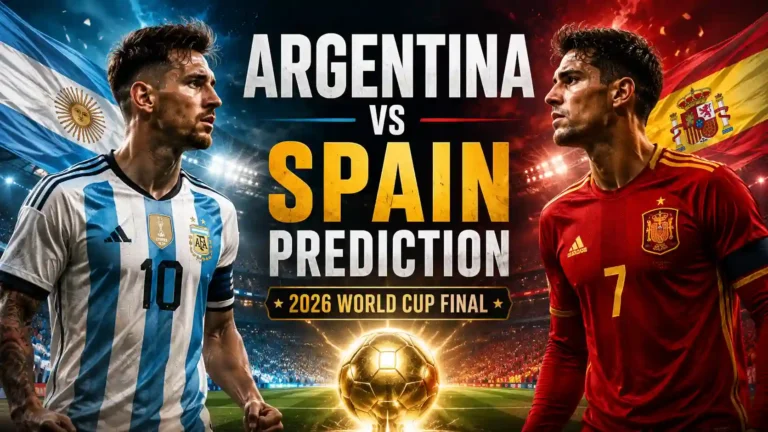
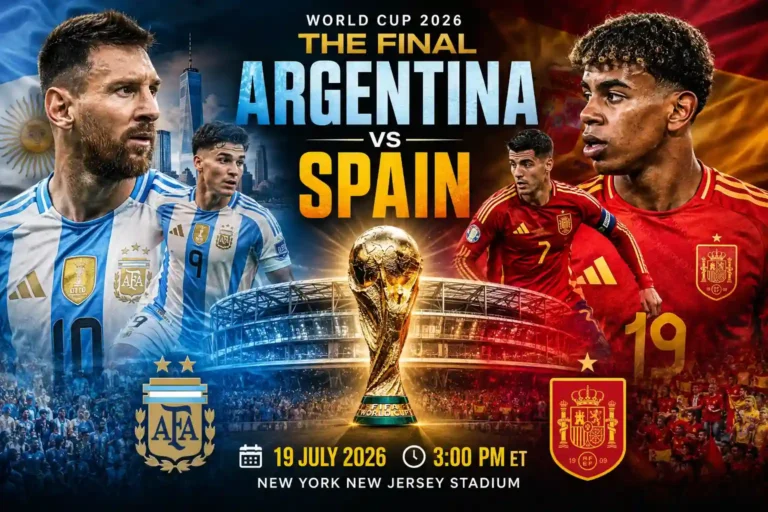
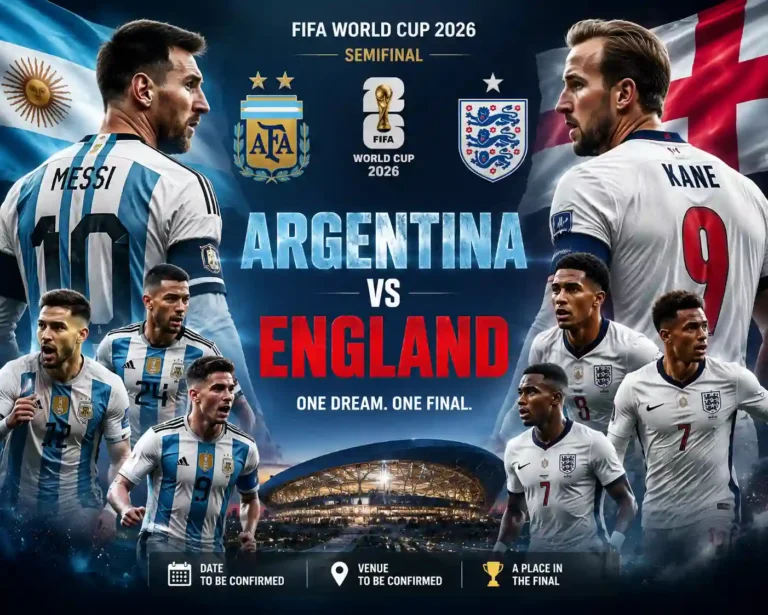
The FIFA World Cup 2026 has entered its most thrilling phase. After weeks of intense group-stage football, only the strongest teams remain in the tournament. Every match from this point forward is a knockout contest, meaning there are no second chances. One defeat ends a team’s dream of becoming world champions, while every victory moves them one step closer to lifting football’s most prestigious trophy.
The expanded 48-team format has introduced the Round of 32 in FIFA World Cup history. This new stage has made the competition even more exciting by allowing more nations to compete for global glory. Fans can now enjoy additional blockbuster fixtures, surprise upsets, and unforgettable moments before the tournament reaches the final.
In this guide, you’ll learn how the FIFA World Cup 2026 knockout stage works, the journey from the Round of 32 to the Final, and why every match carries enormous importance for players, coaches, and millions of supporters around the world.
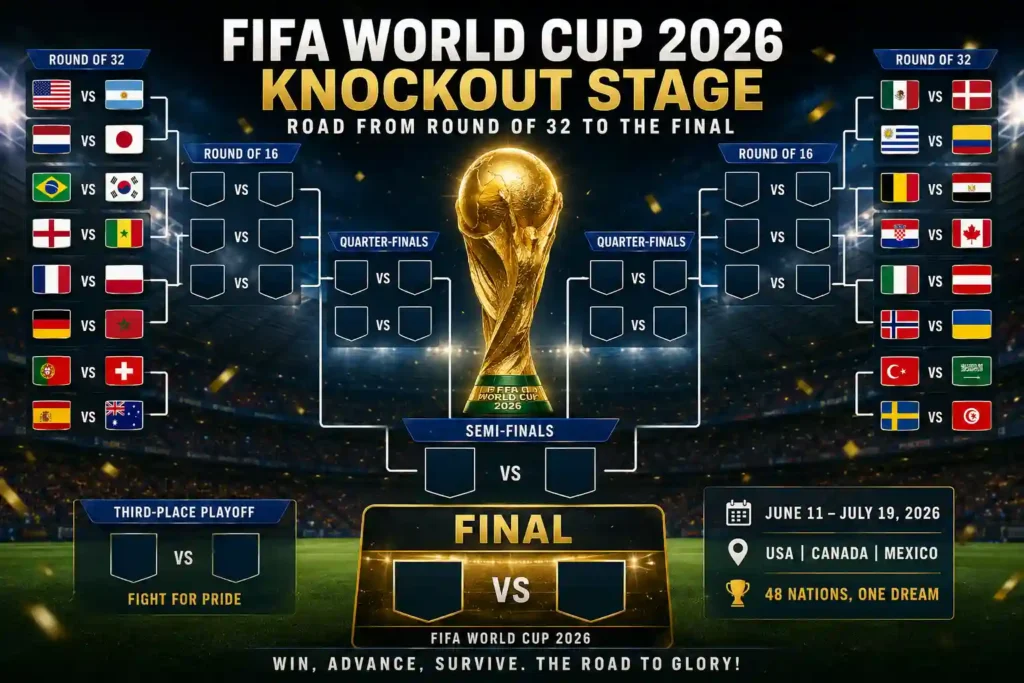
The Race for the World Cup Begins
The knockout stage is where the FIFA World Cup truly comes alive. Unlike the group stage, teams cannot recover from a poor performance. Every game is a winner-takes-all battle where tactics, discipline, and mental strength become just as important as talent.
This stage features the best teams from the group phase, including group winners, runners-up, and the highest-ranked third-place finishers. Each nation now faces the same challenge: win every match or go home.
Football fans often consider the knockout rounds the most entertaining part of the tournament because every goal, save, and substitution can completely change a country’s fate.
FIFA World Cup 2026 Knockout Stage Format
The expanded tournament follows a simple progression.
| Stage | Teams Remaining | Teams Advancing |
|---|---|---|
| Round of 32 | 32 | 16 |
| Round of 16 | 16 | 8 |
| Quarter-finals | 8 | 4 |
| Semi-finals | 4 | 2 |
| Third-place Playoff | 2 | Winner of Third Place |
| Final | 2 | World Champion |
To become world champions, a team must win five consecutive knockout matches after qualifying from the group stage.
Round of 32 Fixtures
The Round of 32 is one of the biggest additions to the FIFA World Cup 2026. Instead of moving directly into the Round of 16, qualified teams now compete in an extra elimination round.
This creates more high-profile encounters between football’s strongest nations while giving emerging teams another opportunity to make history.
Several factors make the Round of 32 especially exciting:
- More knockout matches than ever before
- Greater chance of major upsets
- Increased pressure on tournament favorites
- More opportunities for young stars to shine
- Every match has direct qualification consequences
The atmosphere also changes dramatically. Players become more cautious because one mistake could end years of preparation.
What Makes the Round of 32 So Competitive?
History has shown that knockout football often ignores rankings.
A team may dominate possession but lose on penalties. An underdog may defend brilliantly before scoring a late winner. These unpredictable moments are exactly why fans love the FIFA World Cup.
Key factors that decide the Round of 32 matches include:
- Defensive organization
- Clinical finishing
- Goalkeeper performances
- Tactical flexibility
- Squad depth
- Experience under pressure
Many football experts believe that momentum becomes even more valuable than reputation during the knockout stage.
Route to the Round of 16
Winning the Round of 32 secures a place in the Round of 16, where the remaining sixteen nations continue their pursuit of the trophy.
By this stage, only teams capable of handling pressure survive. Coaches begin making more tactical adjustments, while every small decision can influence the outcome of a match.
The Round of 16 regularly produces some of the tournament’s most memorable fixtures because elite nations often begin facing each other for the first time.
Fans can expect:
- Tactical masterclasses
- Intense defensive battles
- Extra-time drama
- Penalty shootouts
- Individual moments of brilliance
Reaching this stage is already a major achievement, but every team now dreams of progressing even further.
Quarter-finals: Where Legends Rise
Only eight teams remain in the quarter-finals.
This stage is often called the point where champions reveal themselves. Every nation has already overcome multiple knockout matches, making the quality of football exceptionally high.
The quarter-finals usually feature:
- Former world champions
- Tournament favorites
- Surprise underdogs
- Golden Boot contenders
- Elite goalkeepers
- World-class managers
Every mistake becomes more costly because there are fewer opportunities to recover.
Matches at this stage are often decided by:
- Tactical discipline
- Set pieces
- Individual brilliance
- Leadership
- Mental resilience
Many iconic World Cup moments have taken place during the quarter-finals, where legendary players have delivered unforgettable performances when their countries needed them most.
Who Looks Strongest in the Knockout Stage?
Several factors separate genuine title contenders from the rest of the field.
The strongest teams generally possess:
- A balanced attack and defense
- Multiple match winners
- Strong squad depth
- Experienced international players
- Tactical flexibility
- Consistent performances throughout the tournament
However, knockout football rarely follows predictions. Every World Cup produces unexpected heroes, dramatic comebacks, and surprise eliminations that remind fans why football is known as the world’s most unpredictable sport.
Knockout Stage at a Glance
| Knockout Round | Objective |
|---|---|
| Round of 32 | Survive the first elimination match |
| Round of 16 | Reach the tournament’s final eight |
| Quarter-finals | Secure a place in the semi-finals |
| Semi-finals | Qualify for the World Cup Final |
| Final | Lift the FIFA World Cup Trophy |
Semi-finals: One Step Away from Immortality
The FIFA World Cup semi-finals are where pressure reaches its highest level. Only four teams remain, and each nation is just one victory away from playing in the biggest match in world football.
At this stage, there are no easy opponents. Every team has already survived multiple knockout rounds and proven they belong among the world’s elite. Managers focus on tactical discipline, while players must remain calm in moments that can define their careers.
Semi-final matches are often remembered for dramatic goals, heroic defending, and unforgettable performances from football’s biggest stars.
What Makes the Semi-finals Different?
Unlike earlier rounds, the semi-finals are as much a mental challenge as a physical one. Every mistake is magnified, and every opportunity matters.
Success usually depends on:
- Experience under pressure
- Tactical flexibility
- Squad depth
- Defensive organization
- Clinical finishing
- Leadership from senior players
The winners move on to the FIFA World Cup Final, while the losing teams still have one more match to compete for third place.
The FIFA World Cup Final
Every footballer’s dream is to play in a World Cup Final.
After weeks of intense competition, only two teams remain with a chance to lift the famous FIFA World Cup Trophy. Millions of fans from around the world tune in to witness history as the finalists compete for football’s greatest prize.
Winning the final is about more than lifting a trophy. It creates unforgettable memories, cements legacies, and inspires future generations of players.
The World Cup Final often delivers:
- World-class tactical battles
- High-pressure moments
- Historic individual performances
- Emotional celebrations
- A new world champion
Every pass, tackle, and goal can become part of football history.
Third-Place Playoff: More Than Just Consolation
Although the spotlight is on the final, the Third-Place Playoff remains an important fixture.
The match allows the two semi-final losers to finish their World Cup campaign on a positive note. It also provides players with another opportunity to represent their country with pride and improve their final tournament ranking.
Many teams approach this match with attacking football, making it one of the most entertaining games of the competition.
For young players, it can also be a chance to gain valuable experience on the international stage.
Understanding the Knockout Bracket
The FIFA World Cup 2026 knockout bracket follows a simple progression.
A team must continue winning to advance through each round until the final.
Knockout Journey
Round of 32
⬇
Round of 16
⬇
Quarter-finals
⬇
Semi-finals
⬇
Final
🏆 World Champion
Unlike league competitions, there are no points or second chances. Every match produces one winner and one eliminated team.
If a knockout match ends in a draw after 90 minutes, it moves to:
- Extra Time
- Penalty Shootout (if necessary)
This format creates some of the most dramatic moments in football history.
Teams Most Likely to Lift the Trophy
Every World Cup features several strong contenders, but knockout football often rewards teams that combine quality with consistency.
Tournament Favorites
The traditional football powers usually enter the knockout rounds with strong expectations because of their experience, squad depth, and winning mentality.
These teams often possess:
- Elite forwards
- Creative midfielders
- World-class defenders
- Reliable goalkeepers
- Experienced managers
Dark Horses
Every tournament also produces surprise teams capable of defeating higher-ranked opponents.
Dark horses usually succeed because they:
- Defend with discipline
- Counterattack effectively
- Work as a unit
- Play without pressure
- Capitalize on opponents’ mistakes
Their fearless approach often creates some of the biggest upsets in World Cup history.
Players Who Can Define the Knockout Stage
Knockout football often belongs to players who perform when the pressure is highest.
The biggest stars are expected to deliver in crucial moments, but every tournament also introduces new heroes to the football world.
Fans will closely watch players competing for:
- Golden Boot
- Golden Ball
- Best Young Player
- Golden Glove
Outstanding individual performances often become the difference between elimination and qualification.
FIFA World Cup 2026 Knockout Schedule
| Stage | Purpose |
|---|---|
| Round of 32 | First knockout round |
| Round of 16 | The top 16 teams compete |
| Quarter-finals | Eight teams remain |
| Semi-finals | Four teams battle for the Final |
| Third-Place Playoff | Determines third place |
| Final | Crowned the World Champion |
Every stage increases the level of competition, making the road to the trophy even more challenging.
Final Thoughts
The FIFA World Cup 2026 knockout stage is where football reaches its highest level. Every match carries enormous pressure, every victory brings teams closer to glory, and every defeat ends a nation’s dream of becoming world champion.
From the newly introduced Round of 32 to the unforgettable World Cup Final, each stage offers thrilling football, tactical battles, emotional moments, and memories that fans will cherish for years. Whether you’re following your favorite team or simply enjoying the world’s biggest sporting event, the road from the Round of 32 to the Final promises excitement at every step. As the tournament progresses, only one nation will remain standing, lifting the FIFA World Cup Trophy and writing its name into football history.
FAQ’s
A team must win five consecutive knockout matches:
Round of 32
Round of 16
Quarter-finals
Semi-finals
Final
If the score remains level after 90 minutes, the match goes into extra time. If there is still no winner, the game is decided by a penalty shootout.
The Round of 32 is the first elimination stage of the expanded FIFA World Cup 2026. It allows more qualified teams to compete in knockout football and adds excitement to the tournament.
Yes. The teams that lose the semi-finals play one final match to determine who finishes third in the tournament.
About the Author